Andy Jamieson

Sometime Geek Overlord, bi-monthly Dungeon Master, part-time care worker, reigning Husband of the Year, & full-time daddy. Also, proficient proverbial juggler.

Sep 112011
 

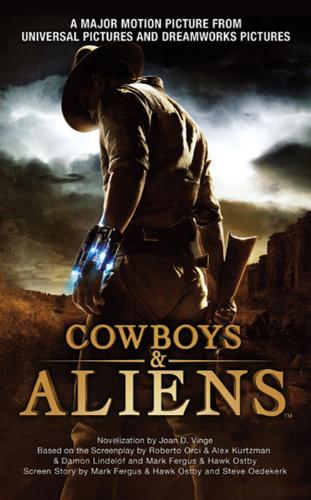
Cowboys and Aliens by Joan D. Vinge

(published by Tor, 2011, PB, £7.99, out now)

Unlike many books that are deemed good enough to be made into motion pictures, this is a novel that is taken from the movie; a tie-in novel. This, in my opinion, leaves no room for the imagination to run whilst reading. And is quite clearly an extra money-making move for the publishers. I’ve not seen the movie but have heard and read a few reviews; some good, although most average or bad. This didn’t put me off reading this novel, though. I did wonder if perhaps the book might draw more upon the source material (a graphic novel of the same name, by Scott Mitchell Rosenberg). But from the cover it is made very clear that the novelisation is based upon the screenplay by Robert Orci and Alex Kurtzman (responsible for the Transformers movies and the recent Star Trek reboot/sequel).

It was very easy to picture the characters, given that I could put faces to them, and credit to the film-makers, the roles are well cast; I could see Daniel Craig and Harrison Ford very clearly. The plot is straightforward: a man wakes in the desert, it is the Wild West of the late 1800’s. He has no memory of how he got there, there is a wound in his side – and there is a strange metal casing around his wrist, apparently indestructible. He wanders into a town called Absolution (make of that pretext what you will…); of the many characters he comes across, one is an ex-alcoholic turned preacher-sheriff and doctor! It is made very clear by the locals that this stranger is not welcome. But, of course, that all changes as soon as the aliens turn up. I’m not ruining anything for you by telling you there are aliens in this book… The stranger brings together a posse (composed of many who previously hated him) and duly they all save the day. And America. And the world.

From a promising start, the novel soon became very predictable, with a narrative that trudged along at a snail’s pace. About two thirds of the way through I had to put it down. I’d tried to immerse myself into the world of Cowboys and Aliens but to no avail. I’d had enough. If the movie is anything like the book, I would see it at your own peril… The book was enough for me.

Grant Knox, Creative Writing student, Edinburgh

Sep 082011
 

The Castle Omnibus by Steph Swainston

(Victor Gollancz, 2010, PB, £16.99)

The Castle Omnibus is one of the most fascinating and refreshingly original fantasy series I’ve ever read, gathering the trilogy of The Year Of Our War, No Present Like Time, and The Modern World. Instead of a muscle bound warrior or powerful mage as the main character we get Jant, a womanising junkie who also happens to be the only man in the world who can fly. And he’s immortal, although long life hasn’t gifted him with any great amount of wisdom. The world Swainston has created is at times beautiful, savage and even overwhelming, yet the reader is kept grounded by the humanity that is bestowed on the characters. It’s a shame that so few writers have the imagination that Swainston does. 

Jonathan Taylor, Geekzine Assistant Editor (& Lead Bookseller, Waterstone’s Fort Kinnaird, Edinburgh)

Please note: This review originally appeared in issue 5 of the Edinburgh Geekzine, published in spring 2010.

Sep 082011
 

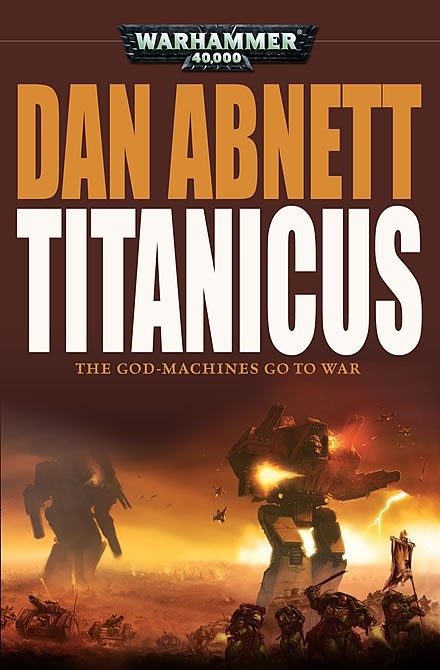
Titanicus by Dan Abnett

(Black Library, 2009, PB, £7.99)

The world of Orestes comes under attack from a legion of chaos Titans; an Imperial detachment is sent to save the day. The set-up is deceivingly simple, the execution is as wonderfully thrilling as you would expect from Abnett, the master of future war novels. This could have easily been a simple yarn about giant machines destroying cities and tearing great chunks out of each other – instead Abnett keeps the reader invested in the fate of the humans caught up in this apocalyptic struggle. As he’s done before with his Eisenhorn series, Abnett shows a real talent for writing political intrigue and reminds us that humans can be just as nasty as any warp-twisted spawn.

Jonathan Taylor, Geekzine Assistant Editor (& Lead Bookseller, Waterstone’s Fort Kinnaird, Edinburgh)

Please note: This review originally appeared in issue 5 of the Edinburgh Geekzine, published in spring 2010.

Sep 082011
 

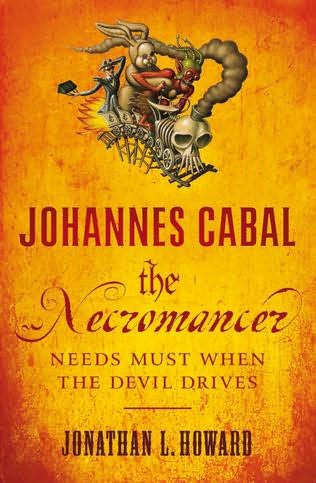
Johannes Cabal the Necromancer by Jonathan L. Howard

(Headline, 2010, PB, £7.99)

This is an easy, entertaining read, that reminds very much of Neil Gaiman and Terry Pratchett at their most mischievous, which of course is a good thing. The titular Johannes Cabal is on a mission to win back his soul from Satan and he has one year to do it. The catch is that he needs to find one hundred souls in exchange…

There is a fearless humour at work here, matched by some accomplished plotting from debut novelist Howard, and his writing is skilful with some pleasingly dextrous bouts of wordplay. A cast of colourful characters (mainly grotesque and/or undead) coupled with boundless imagination make this an essential read for those looking for something new and excellent. A superb debut novel.

Andy Jamieson, Editor 

Please note: This review originally appeared in issue 5 of the Edinburgh Geekzine newsletter, published in spring 2010.

Sep 082011
 

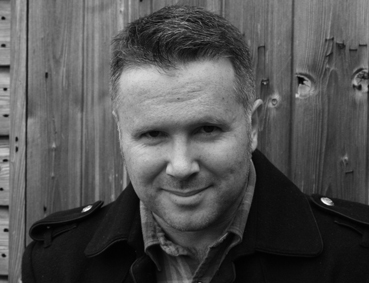
Curtis Jobling. 


What inspired the world of Lyssia and the Seven Realms? I’ve been a lover of horror and fantasy from a criminally young age, and knew that if I were to ever get around to writing a novel, then chances were it would be in one of the two genres. Who guessed it would be both? Shapeshifting monsters have always fascinated me, I was a huge fan of Lon Chaney’s Wolfman growing up, and as I grew that affection shifted to American Werewolf and The Howling. Fantasy roleplaying games played a big part in my adolescence too (often it was me who was running them) and that was probably where I learned the craft of storytelling. The world-building side of Wereworld probably comes from that misspent youth, chucking twenty-sided dice and bodging saving throws.

What challenges did you face with writing Rise of the WolfIt was my first novel and I had an awful lot to learn. My first attempt at novel-writing had resulted in a gothic-fantasy children’s story which never got picked up when pitched to publishers – I could see where the problems lay with the manuscript and it had been a steep and invaluable learning curve. Having had success in different fields (animation and picture books) I was learning a new trade pretty much from scratch and had a lot to prove. The disciplines I had in place from those other creative industries certainly stood me in good stead when I set my mind to working on Wereworld though.

What plans do you have for the Wereworld series? Puffin have picked up four books in the series and I’m hoping I can keep writing stories set within the world of the books. It’s a very broad canvas I’ve created to play with, with the sky being the limit when one thinks of the different kinds of therianthropes one could feature in a story. I’m not restricted to just following the story of young Werewolf, Drew Ferran, either. There’s a large cast of supporting characters to explore as well as some big fat hints dropped into the books as to what other creatures and dangers exist in the wider world…

You are clearly a big fan of the fantasy genre. Do you have any favourite writers or books? Tolkien is still the daddy for me – The Hobbit is the first novel I ever got out from my local library as a nine year old kid and it took me a whole summer and numerous library fines to read it. Of the contemporary fantasy authors writing today one need look no further than George R R Martin, who I’m a huge admirer of. He’s a master of epic story-telling and weaving disparate characters and plots together. Joe Abercrombie is the pick of the British fantasy writers out there for me – I’d love to try my hand at something adult at some point in time, but for the foreseeable I’m very happy to keep exploring Wereworld.

Where do you write? And do you have any unusual ‘rituals’ before you begin a session of writing? I have a fabulously untidy studio/playroom at home where I write, often after the kids have gone to bed. I’m not sure I’ve any rituals to speak of, bar making numerous cups of tea and coffee and procrastinating before getting on with the business of writing.

What book are you reading at the moment? Horns by Joe Hill. Great horror writer, perhaps even better than his old man. We’ll have to wait and see if he’s as prolific, I certainly hope so. Heart shaped box was a thing of genius.

What are you working on at the moment? I’m finishing writing Wereworld Book Three presently – a couple of chapters to complete – and then it’ll be on to Book Four. I started writing a YA ghost story between books Two and Three as well, in the contemporary real world setting, which I’ll get back to as time allows.

The second book in the Wereworld series is out in July, Rage of Lions. What can readers expect from this next instalment? Rise of the Wolf ended on a triumphant cliffhanger for Drew, with the reluctant hero facing up to his future as the rightful king of the realm. Rage of Lions sees Drew still struggling with the weight of expectation on his shoulders from not only the people of Lyssia but his fellow Werelords. The moment the opportunity arises to return to the road on a desperate quest, he seizes it with both hands. The story sees friends separated, poor choices, terrible new foes and some pretty immense battles. The peril is ramped up for all the characters: my editor likened Rage to Empire Strikes Back, if Rise was the Star Wars! That suits me fine – I might have been upset if she’d likened it to Phantom Menace…

Any advice for budding fantasy writers out there? Practice your craft. Don’t ‘settle’ when you’re writing, always try and improve. Seek the advice and criticisms of others – the honest kind, I might add, as opposed to folk blowing smoke up your bum. Criticism is great when its constructive, so surround yourself with like-minded creative souls who can help you towards your goal.

Interview with Andy Jamieson, Editor

To read Andy’s review of Wereworld: Rise Of The Wolf, click here.

Follow @curtisjobling on TWITTER

www.curtisjobling.com

Sep 082011
 

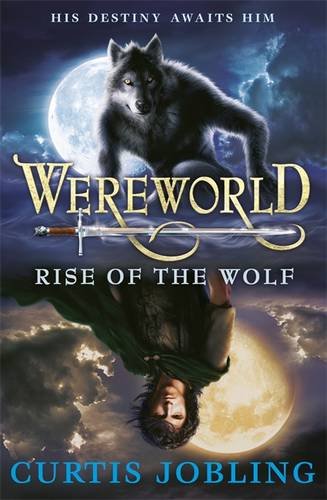
Wereworld: Rise Of The Wolf by Curtis Jobling

(Puffin, 2011, PB, £6.99, out now)

Every now and then a genre can be reinvigorated by a title. Fantasy for younger readers is one such genre, and is in constant flux, changing and developing constantly – dictated either by publishers reacting to market trends or by authors with fresh ideas. Enter Wereworld: Rise Of The Wolf, the debut novel from Curtis Jobling, and the first in a series. Werewolves are fringe players on the goth-rom scene and have never had the impact of, say, vampires. Steve Feasey’s teen-targeted Changeling series puts the werewolf at the centre. But Curtis Jobling’s Wereworld takes lycanthropy one step further, splicing it into a fantasy setting; the realm of Lyssia is a land where the aristocracy are were-creatures, expanding on the werewolf concept in an imaginative way. There are were-bears, were-lions, were-rats, and so on.

Jobling is perhaps better known for his animation successes – he is the creator and designer of no less than Bob the Builder, and, more recently, Raa Raa The Noisy Lion. Which makes the impact of Wereworld even more impressive. From his map (created by Jobling himself), to his world’s politics and societal hierarchy – this author has clearly been at work on his ‘universe’ for some time. He’s built a wonderfully convincing arena for his characters and an involving quest for Wereworld’s young hero, Drew Ferran. He starts the story as a simple teenage farm boy, living out at a small farmstead on the Cold Coast, near the market town of Tuckborough, with his family; father Mack, mother Tilly, and brother Trent. Drew is beginning to feel changes at work within him, but this is no puberty. He is wracked by nausea and fever that come and go by the day.

When Mack and Trent are away for the market at Tuckborough, the Ferran farmstead is attacked by a huge, mysterious creature. The moon is high and full and Drew and the creature fight, as a change overcomes the young –

Nope, I’m not going to ruin it for you, even though you should be able to guess what happens to Drew. The attack on the farmstead is described in evocative, bloody detail, and this is where Drew’s life changes.

You really need to read this book. I refuse to ruin your enjoyment of Drew’s adventure with a continuous list of spoilers. It’s epic, taking in dark forests, far away kingdoms and castles, feuding families, romance, bloody combat and thrilling adventure, political plotting and uprisings – and plenty more. In short, it is one of the most impressive fantasy novels I’ve read in I-can’t-remember-how-long, and a stunning debut novel. I feel confident in stating that Wereworld is the next big thing.

Andy ‘Howling’ Jamieson, Editor

To read Andy’s interview with author Curtis Jobling, click here.