Andy Jamieson

Sometime Geek Overlord, bi-monthly Dungeon Master, part-time care worker, reigning Husband of the Year, & full-time daddy. Also, proficient proverbial juggler.

Sep 292012
 

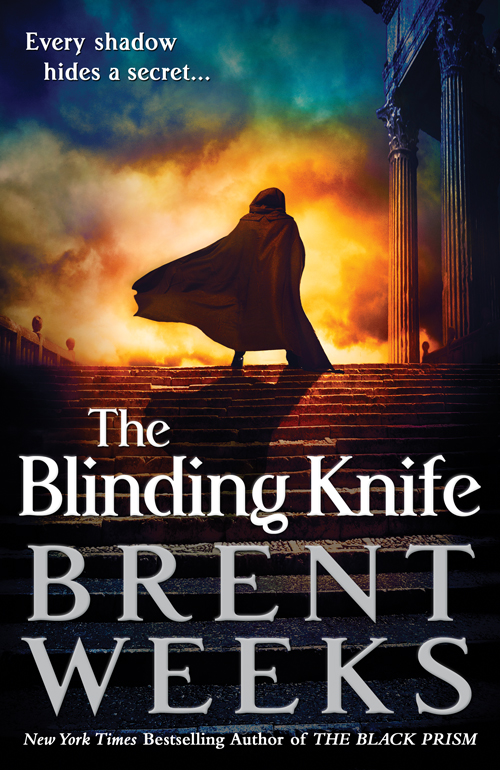
American Fantasy author Brent Weeks will be appearing at Waterstone’s Edinburgh West End on Tuesday 2nd October at 6pm, to read from and discuss, and of course sign copies of, his new book, The Blinding Knife.

The Blinding Knife is the second book in the Lightbringer series, following on from 2011’s The Black Prism, featuring the escapades of Gavin Guile, sometime highpriest and emperor, and a man who knows exactly when he will die. However, as with all good fantastical yarns, nothing ever happens as it is supposed to happen….

The Blinding Knife is out now, published by Orbit in hardback at £14.99.

Brent Weeks will be at Waterstone’s Edinburgh West End branch (128 Princes Street) on Tuesday 2nd October at 6pm.

Tickets are free but limited. Call the branch on 0131 226 2666 to talk to the event’s team about reserving a ticket.

Brent Weeks is touring so check his website (www.brentweeks.com) to see if he is coming to a town near you, other than Edinburgh.

Sep 202012
 

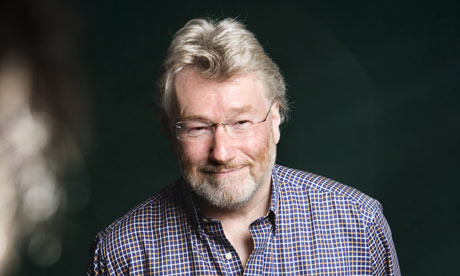
Iain M. Banks

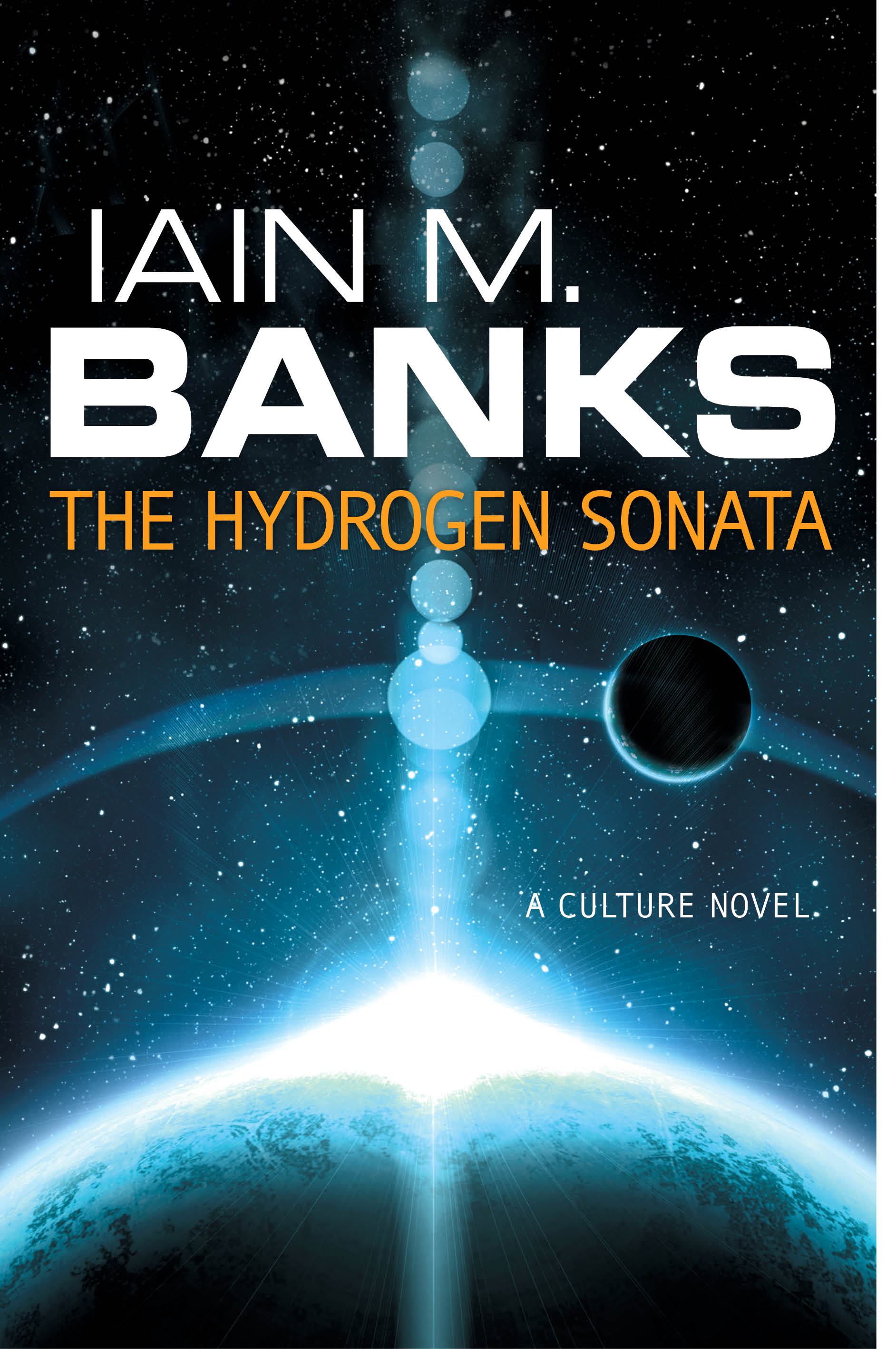
The Hydrogen Sonata, the new Culture novel by Iain M. Banks, is out in early October. He is one of the world’s foremost science-fiction writers as well as a prominent fiction writer (as Iain Banks). Mr Banks took time out from his busy schedule to answer my questions….


Andy Jamieson: What inspired your new Culture novel, The Hydrogen Sonata? Has it been an idea gestating for  a while?

Iain M. Banks: I’d been intending to go into more detail about what Subliming involves for a few years, so, yes, it had been simmering.


AJ: Is The Hydrogen Sonata accessible to new readers unfamiliar to the Culture series? 

IMB: Well, I wouldn’t go to it first if you don’t read SF at all – of mine, Consider Phlebas and Player of Games would be where to start – but a hardened skiffy reader could probably cope with no knowledge of the earlier Culture stories.


AJ: When you first started out designing the universe of the Culture, beginning with Consider Phlebas in 1987, did you plan for it to have such longevity as a series? Do you foresee there being an end in sight to the series?

IMB: The order in which the books were published is deceptive; the first Culture book written was Use of Weapons, in 1974 (though in a pretty awful first-draft form); The Player of Games first draft dates from 1979.  So the Culture was a mature technology, if I can put it that way, by the time I came to write Consider Phlebas in 1981.  I always thought of it as open-ended; something I’d probably want to come back to now and again.  At the same time I didn’t want to get too in a rut about it, so I always intended writing other non-Culture stuff too.

I guess it’s surprised me how much more I’ve found to write about within the series, but then a detail from one book – like the idea of subliming for example – will spark a whole new train of thought, and sometimes blow up like a little bubble-universe of its own to create an entire novel.  I guess it’ll end when I’m no longer around to write about it!  I certainly won’t be rounding it all off in some big explosive finish as that’s a bit clichéed, and somehow feels antithetical to the spirit of the Culture itself, which is largely about not Subliming and instead sticking around to interfere and try to do good.


AJ: Would you like to see any of your Culture novels adapted for television or cinema? And is there any particular book in the series that you feel is an obvious contender for adaptation? Has there been any interest?

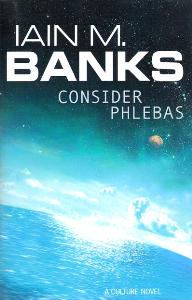
The first Culture novel, Consider Phlebas

IMB: Good grief yes; all of them! Consider Phlebas would be the one to start with, I suppose, as it’s the most gaudy and spectacular – a romp, basically. There was serious interest in Player of Games from Pathé many years back, and there are always low-level rumblings of interest, but nothing to get too excited about.


AJ: Do you feel that, as a genre, science-fiction is in a healthy condition at the moment? Are there any books or particular authors, besides yourself, that have reinvigorated the genre?

IMB: I’m probably not the best person to ask; John Clute would know.  I think it’s sufficiently healthy that new writers come along all the time and keep reinvigorating it.


AJ: After all your success over the years, what keeps you fresh and inspired creatively?

IMB: I suspect it’s a deep-seated refusal to acknowledge how old I actually am.  Other than that, just still finding stuff interesting, I suppose: history, current events, science and technology; all that malarkey.


AJ: Does the process of writing a novel differ between your fiction and science-fiction novels, beyond the content?

IMB: No; they all have plots, characters, dialogue, and so on.  The skiffy ones are a bit longer … and tend to have more non-human sarcasm issues.  I blame the drones.


AJ: What is the best advice you can give to aspiring writers?

IMB: It’s about the three ‘P’s:  practice practice practice.  Basically writing is like everything else; the more you do it, the better you get.  Also, it helps to be (and have been) a voracious reader.  Last tip:  get to the end, then revise.  Don’t polish that first sentence / page / chapter for so long you never get to the end of the story / novel.


AJ: What do you read for leisure? Any recommendations?

IMB: I read pretty much like I write; half mainstream, half SF.  Yes:  read Mike Harrison’s trilogy (who’d have thought that?) comprising Light, Nova Swing and Empty Space.  It is / they are peerless.


The Hydrogen Sonata is out on Thursday 4th October, published by Orbit, £20 in Hardback.

Iain will be appearing alongside Peter F. Hamilton at Waterstone’s Edinburgh West End branch on Wednesday 10th October at 6pm. The authors will be reading from and discussing their new books, and will be signing afterwards.

Tickets are free from the branch but limited. Call the branch on 0131 226 2666.

Many thanks to Iain for his time. Interview conducted by Andy Jamieson, geekzine Editor-in-Chief.

Sep 142012
 

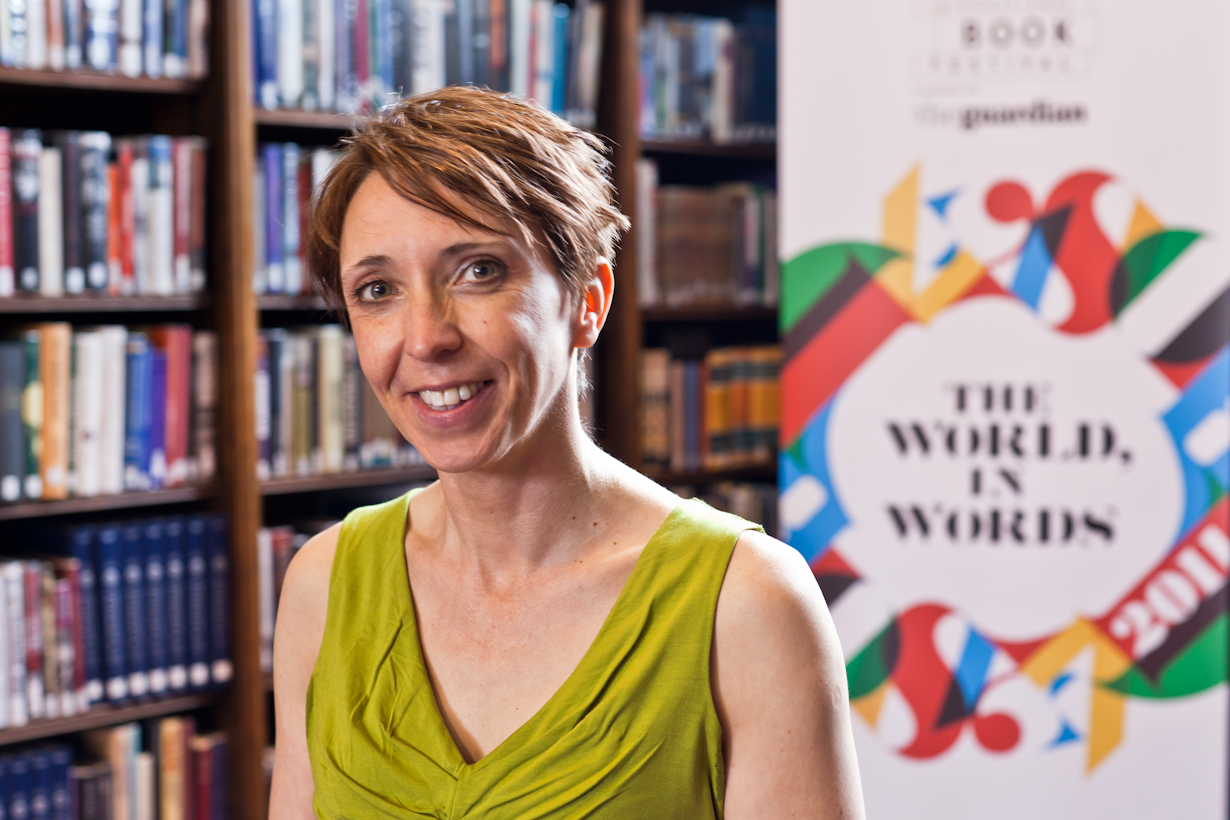
Janet Smyth is the Children’s Director of the Edinburgh International Book Festival, and as such is responsible for selecting which authors and events make up the Children’s programme at the book festival. Janet took time out of her busy schedule to answer my questions.


Andy Jamieson: This is your second year as Children’s Director at the Edinburgh International Book Festival. What was the biggest challenge for you with this year’s festival, in contrast to last year?

Janet Smyth: The biggest challenge was having the courage of my convictions and seeing all the changes that I had made in theory play out in practice. Also, as with the previous year, having the stamina to work from dawn till (after) dusk for 18 days solid is always a challenge – whilst not completely neglecting husband and child!

AJ: What were the highlights for you at the book festival this year? Were there any events / authors in particular that made it special for you this year?

JS: Every day has its own definite momentum and vibe. There were so many highlights. I really do love the events in our Imagination Lab space that are for very young children involving stories and craft activities. Authors like Tracey Corderoy, Alison Edgson, Clare Beaton and Alex T Smith create incredibly thoughtful and imaginative activities for young readers and everybody always leaves having created some story related mask or tiara or decorated ladybird. At the other end, some of the Young Adult panel events worked really well. Theresa Breslin and Liz Laird discussing historical fiction saw them just having an absolute blast together and Melvin Burgess and Margo Lanagan led a thoughtful and challenging discussion on how far you can go with the content of teen novels.

Author & illustrator Alex T Smith

AJ: Aside from the line-up of authors, what were the biggest differences at this year’s book festival?

JS: This year, I extended the programme into the evening with a number of the young adult events happening at 7pm and later to try to catch that audience group. Our Night Owl bedtime story events worked really well as did giving the activity corner – originally at the back of the children’s bookshop – it’s own designated space. The Schools programme was also extended by about a further 12 events including those in Gaelic, Scots, French and Polish. There were 3 events designed specifically for youngsters with specific reading difficulties and ‘writers on writers’ workshop sessions for pupils studying Higher and Advanced Higher English.

AJ: What was your background prior to working for the Edinburgh International Book Festival?

JS: I worked for 5 years with Scottish Book Trust on a brilliant project that toured UK writers to the far flung reaches of the Scotland on board a big yellow 7.5tonnes book bus. That was when I met many of the writers I’m still privileged to know and work with such as Julia Donaldson, Vivian French, Theresa Breslin, Keith Gray, Debi Gliori to name just a few. I had 4 years when my daughter was little, as Director of the Pushkin Prizes in Scotland, a creative writing project that operates in secondary schools in Scotland and St Petersburg. During this time, along with my mum I set up Blast-Off Books, which was a specialist children and young adult bookshop and school supply business. That lasted for 9 years before I joined the Edinburgh Book Festival.

AJ: What is it about Edinburgh that makes it such a suitable place for an international book festival?

JS: Edinburgh is such a great sized city. Big cities such as London or New York have areas and often there’s not much population movement to different events but Edinburgh can draw people from all areas as well as outside. Having the Book Festival at the time of all the others also means we benefit from the huge number of visitors in the city. For the kids programme we receive incredible support from the schools and libraries – a vital part of the success of the school programme.

AJ: What book(s) are you reading at the moment? And what was the last truly great book that you read?

JS: I tend to read about 3 or 4 books at a time. I have Toby’s Room by Pat Barker which I’m really enjoying. I’m also reading Sophie McKenzie’s Missing Me which is the 3rd part in her Sister Missing series and is utterly compelling. Also catching up with about 4 copies of TESS that arrived during Festival time and I didn’t have the chance to even glance at.

AJ: Aside from the usual array of big name and celebrity authors, were there any unusual hidden gems amongst the book festival programme that made an impact?

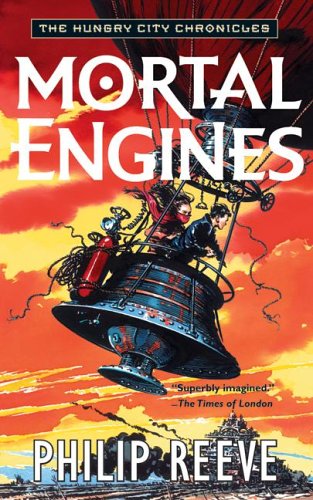
Philip Reeve's Mortal Engines, first in the Hungry City Chronicles

JS: The hidden gem was our Lost for Words event featuring publisher Barry Cunningham (the man who discovered JK Rowling) alongwith Lydia Monks and Philip Reeve. They were discussing what happens when you’re hit with writers block. It sold so quickly and could have been in a bigger venue. Next year I will have the courage of my convictions on that one!

AJ: What have you learned from this year’s festival?

JS: That the conversations you might think are just throw away ‘here’s an idea for next year’ are actually worth holding on to and following through. And also – although this I did know – the world of children’s books is populated with incredibly hardworking, committed, kind and supportive people and that’s from the authors and illustrators to publishers, librarians, and all those who help by chairing and facilitating each event.


Many thanks to Janet. The book festival will return in 2013…

Interview conducted by Andy Jamieson, geekzine editor-in-chief. 

Sep 112012
 

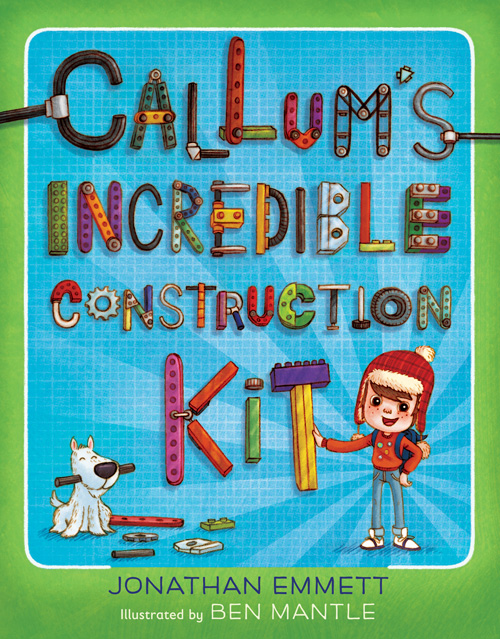
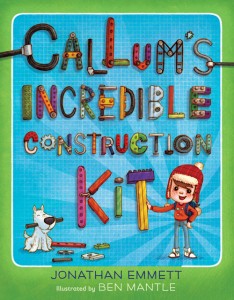
Jonathan Emmett is one of the finest children’s picture book writers at work today. His most recent book, Callum’s Incredible Construction Kit (out now, £6.99, published by Egmont Books), is his 50th book. He kindly took time out of his busy schedule to answer my questions….


Andy Jamieson: What was the inspiration for your latest book, Callum’s Incredible Construction Kit?

Jonathan Emmett: I’ve always loved constructing things and this interest has found its way into many of my stories, but my childhood enthusiasm for Lego is probably the main inspiration for writing Callum. Construction toys like Lego are a great way for kids to exercise their imagination by building miniature models, but imagine how much more fun it would be if the things you built were full-sized and actually worked.

Another inspiration was the picture book Harold and the Purple Crayon by US author-illustrator Crockett Johnson, which has been a favourite of mine since childhood. In it, Harold uses a magic crayon to make drawings that come alive on the page. I wanted to write a story in which another child could do something similar, but in the real world.


AJ: You’ve written so many books, a broad range of stories and styles – what is the secret behind your consistency?

JE: Some books mean a lot more to me than others, but I try to bring the same level of care and attention to everything I write.  If a book is going to have my name on the cover, I want it to be as well-written as possible.
There are certain principles that I try to apply to all my stories, no matter what the style of writing.  One is that a story should have a proper ending – I hate it when I’m reading a picture book and I only realise that the story has finished when I turn the page and find I’m at the back of the book.  Sometimes my stories build up to an ending that the reader might anticipate, like Callum’s Incredible Construction Kit, and sometimes the ending can come as a surprise or even a shock, like The Princess and the Pig (which, despite the title, has a very un-fairytale ending), but both these endings are meant to bring a sense of closure to the story.
Another principle I always apply, whether I am writing in prose or rhyme, is that the story has to read well aloud.  Picture books are often read aloud, either by a parent (repeatedly if the book is their child’s favourite) or by a child that’s learning to read, so the text always has to scan well and be easy to interpret.


AJ: What continues to drive you as an author?

JE: The day after I was made redundant from my last “proper job” as an architect was our first wedding anniversary.  This is the “Paper Anniversary” when you’re meant to give your spouse a paper gift, so my wife gave me a pop-up book.  I know this sounds ungrateful, but I can remember looking at the book and thinking I can do better than that!  And the following day I started making a pop-up book, on the strength of which I was accepted by the literary agent who got me my first publishing deal.
That sense of ‘I could do better than that’ continues to motivate me, but it’s always counterbalanced by a sense of ‘I wish I could do something as good as that’. The latter is inspired in me by great picture books such as Maurice Sendak’s Where the Wild Things Are, Dr Seuss’s The Cat in the Hat or more recently, Julia Donaldson’s The Gruffalo, which is a perfect picture book story.
Another thing that motivates me is the act of writing itself.  As I’m writing one story, an idea for another often occurs to me, so there’s a domino effect.


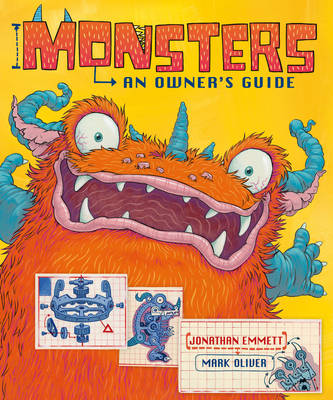
AJ: Your Owner’s Guide series, with illustrator Mark Oliver, are so detailed and superbly designed. After Monsters, and Aliens, do you have plans for any further releases?
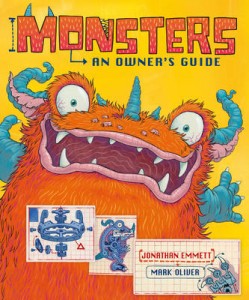
JE: I’m immensely proud of the two Owner’s Guides, partly because Mark and I got together and developed the idea for the first guide, Monsters, before taking it to a publisher.  This meant we were able to work more closely than would usually be the case – people are often surprised to learn that author and illustrators often complete a picture book without ever having been in contact with each other, with the publisher mediating everything.
I love the quirky humour and attention to detail Mark put into the illustrations for both books and we’d both like to work together again on something, but it probably won’t be another Owner’s Guide.


AJ: What projects are you working on at the moment?

JE: I’ve got several projects on the go at the moment, in various stages of development, either with or without a publisher.
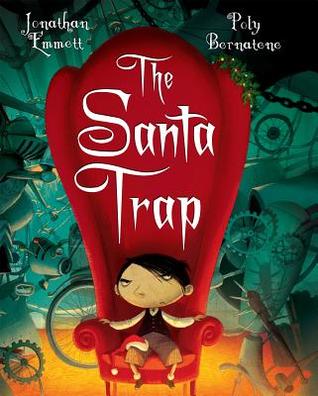
Poly Bernatene, the Argentinian illustrator of The Santa Trap is just finishing some stunningly atmospheric artwork for our third book, Here Be Monsters, a rhyming tale of dastardly pirates and ravenous sea-monsters. And I’ve just written what I hope will be our fourth book – although I’m not telling what it’s about!
I’ve also just written a sequel to my funny farmyard tale, The Pig’s Knickers, which Vanessa Cabban is about to start illustrating.
I’m currently pitching a monster-related series of stories to publishers along with a new picture book I’ve developed with Pigs Might Fly illustrator, Steve Cox.  The book I’m doing with Steve is called Invasion of the Botty-Snatchers  and, as you can probably guess from the title, it has a 50s sci-fi feel with a cheeky twist.
I’m hoping to start work on a follow up to Callum’s Incredible Construction Kit at some point, but in the meantime I’m helping to adapt the book into an animated TV series.  It’s still in the very early stages and TV projects are even more difficult to get off the ground than picture books, so it may never make it to the screen, but I’m enjoying working on the adaptation.
The only thing I’m actually in the middle of writing is a young adult science fiction novel, but I’ve been working on it for five years and I’m only halfway through the first draft!


AJ: How did you start out writing picture books?

JE: I’ve always loved books and wanted to create them. The first publishing deal I had was for a pop-up book that I’d written, illustrated and paper-engineered (although the book was never published) and at that point I was trying to produce everything from board books to adult fiction.  After I’d been at it for a couple of years, my agent, Caroline Walsh, gave me some excellent advice.  She told me that, while there were many talented picture book illustrators, there were very few authors that could write good picture book texts, so if I wanted to make a living out of children’s books, I‘d do well to focus on this particular talent – which is what I ended up doing!


AJ: Out of all the books you’ve written and worked on, do you have a favourite – one in particular that you are most proud of?

JE: That’s a tough one and it changes from day to day, but right now I’d probably say The Santa Trap.  Although it’s about a villainous brat (which I like to think I wasn’t), it’s slightly autobiographical in that it’s partly inspired by the Santa traps I used to build as a boy.
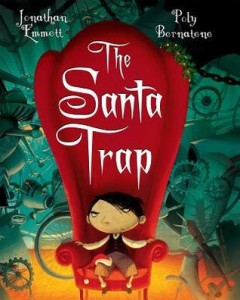
The story quickly found a publisher, but my personal attachment to it was one of the reasons I held out for three years for exactly the right illustrator, someone that could bring the right combination of delightful detail and dark humour to the illustrations.  This turned out to be the fantastically talented Poly Bernatene, who, somewhat inconveniently, lives on the other side of the planet and does not speak English!
It’s obviously a Christmas story and another reason I’m proud of the book is that I feel it’s a fresh and slightly subversive take on this very established genre.


AJ: What do you read for leisure?

JE: I have fairly broad tastes in reading.  Dickens and Vonnegut are particular favourites but I read a wide range of both children’s and adult literature.  I pity those pompous adults who say they wouldn’t be seen dead reading a children’s novel.  Some of the most imaginative, engagingly written fiction I’ve read has been written for kids and some of the most pretentious, self-indulgent for adults – indeed this sort of fiction can only be written for adults as kids would not put up with it.  One of the few authors who I think has written brilliantly for both children and adults in recent years is Neil Gaiman.
I also read quite a lot of science fiction.  One of the great things about being asked to take part in this year’s Edinburgh Book Festival was that I was able to catch Neal Stephenson’s event, since he’s one of my favourite authors.


AJ: What are you reading at the moment?

JE: I’m actually reading Wolf Hall by Hilary Mantel, but I’m going to cheat and mention Cloud Atlas by David Mitchell, which I read a few books back, since that may be of more interest to your readership…

It’s not so much a novel as a set of interlinked stories each with a distinctly different authorial style, nested inside each other like Russian dolls. Each successive story steps forward in time with the outermost story set in the 19th century and the innermost in the far distant future.  If this sounds too clever by half, let me reassure you that, as well as being technically brilliant, the book is very engagingly written.

One of the most impressive things about the book is the two science-fiction stories at the centre of it, one set in a genetically-engineered dystopia, the other in a primitive post-apocalyptic society. Usually when “literary” authors try their hand at science-fiction the results are embarrassingly inept and unoriginal (Iain Banks wrote a great piece on this theme for the Guardian here) but both of the science-fiction stories in Cloud Atlas feel as if they were written by a genre veteran.  It’s my favourite book since Neil Gaiman’s American Gods, which goes back a few years.

Interview conducted by Andy Jamieson.

Many thanks to Jonathan for his answers.

Check out Jonathan’s excellent website, www.scribblestreet.co.uk

Sep 112012
 

Warhammer 40K: Dark Vengeance

Boxed set, Games Workshop, approx. retail £65


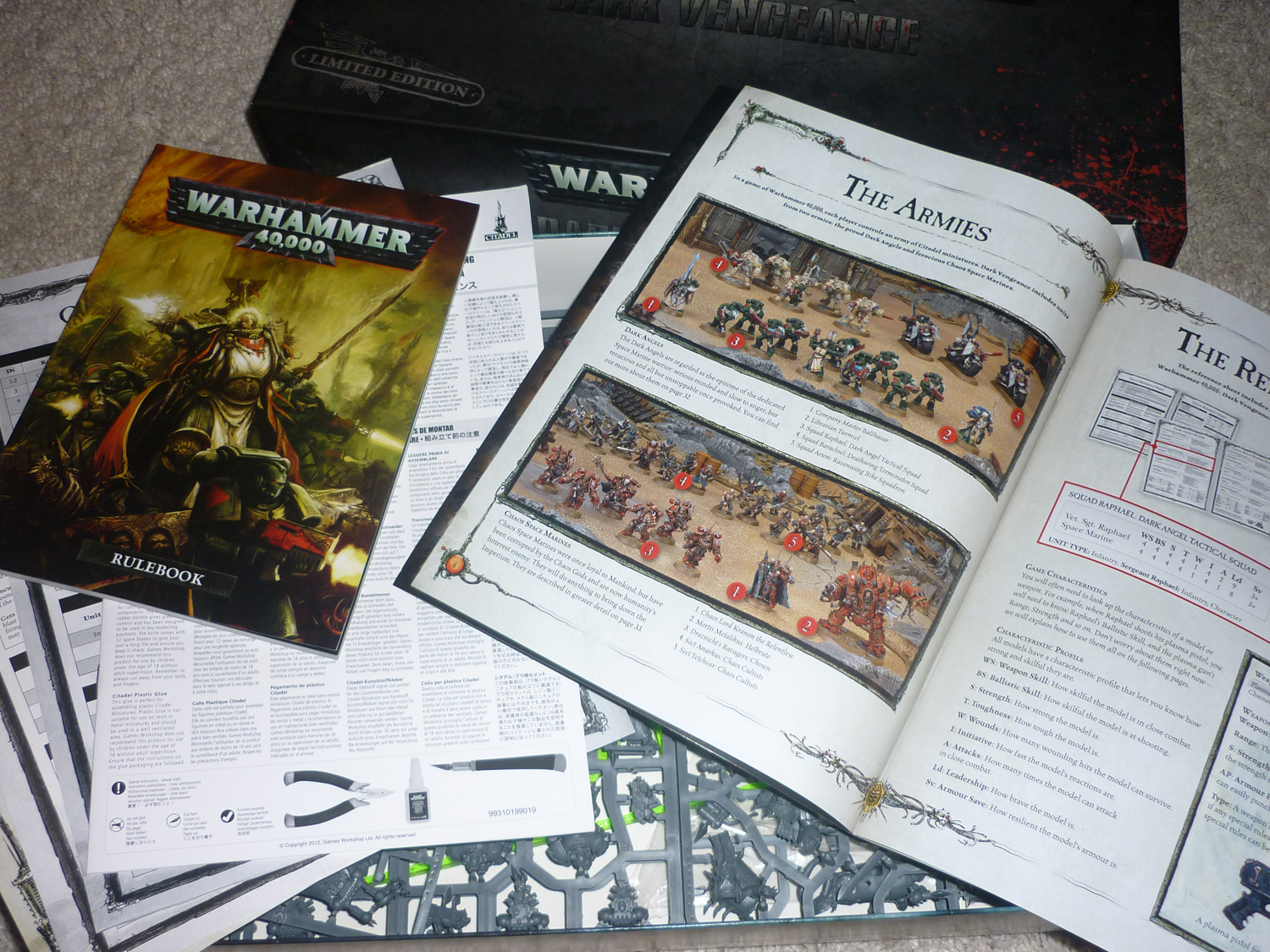
It is quite standard now that when a new edition of the Warhammer 40, 000 rulebook comes out, as it did this summer, that there will be a new boxed set following soon after.

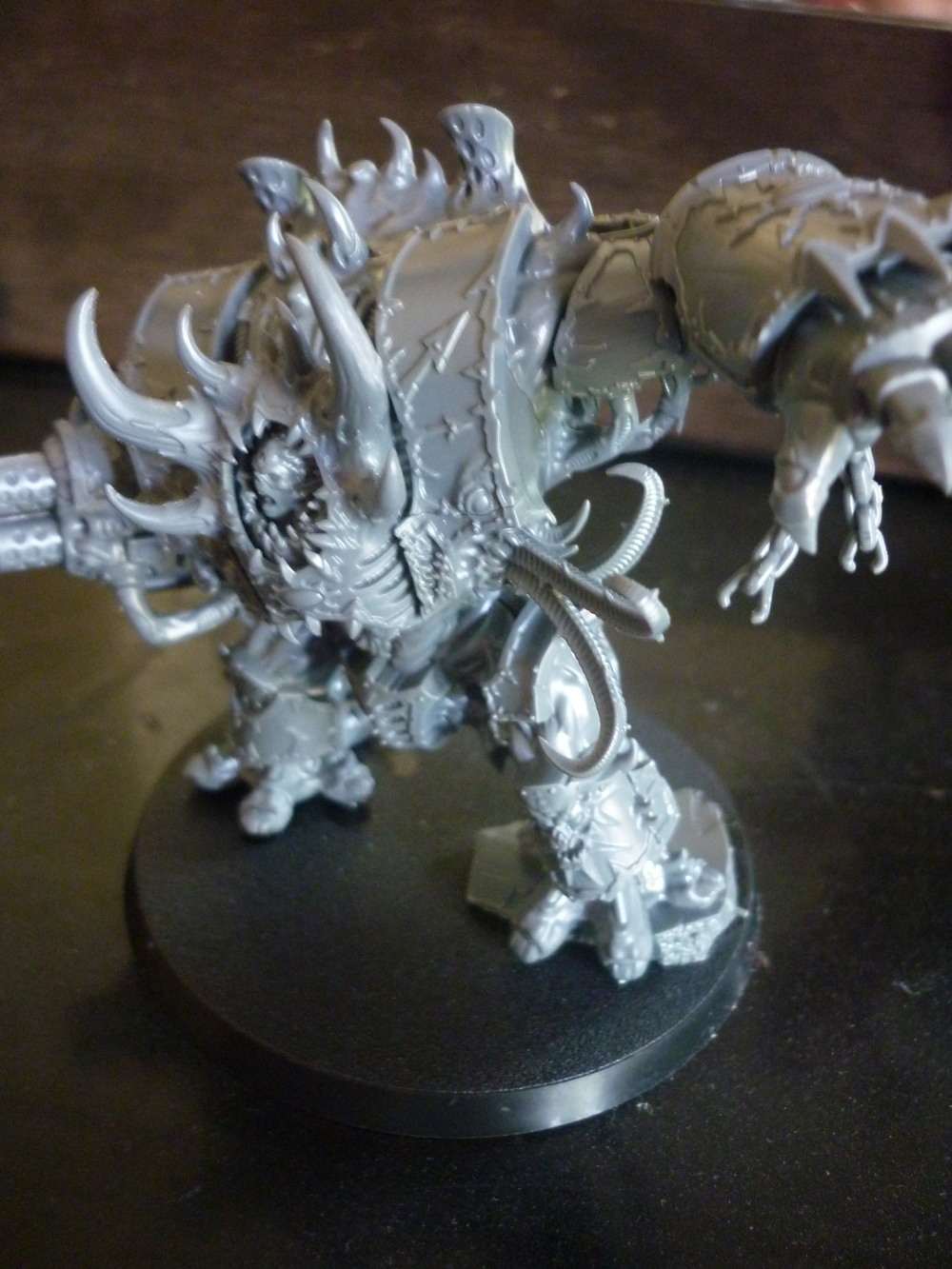
And here we have it: Dark Vengeance, out now as a limited edition for £65 (cheaper online if you hunt around…), featuring a model that will not be in later editions of the Dark Vengeance box, so it seems (Chaplain Seraphicus).

Dark Vengeance features two complete armies, Dark Angels Space Marines, and a force of Chaos Space Marines and Chaos cultists. This latter faction represents the most notable addition to the W40K rules: that of alliances. There is a handy allies table inside the miniature rulebook (page 113) that comes with the Dark Vengeance box-set.

There are varying degrees of alliance: Battle Brothers (ie: close allies, so Space Marines & Imperial Guard), Allies of Convenience (so, Tau and Chaos Space Marines, for example), Desperate Allies (eg: Dark Eldar and Space Orks), and Come The Apocalypse (alliance not happening!). It’s an intriguing set-up and allows for some inventive pairings: Tau and the Black Templars might put aside their differences and team up to take on, say, the Tyranids, or the Necrons.

Ah, yes, the Tyranids. They are filed strictly under “Come The Apocalypse” . They can’t be an ally for anyone, as they are the ultimate predator, and destroy & consume anything and anyone. No one teams up with the ‘nids…

 So, most eye-catchingly, the models; there are  48 miniatures in total.

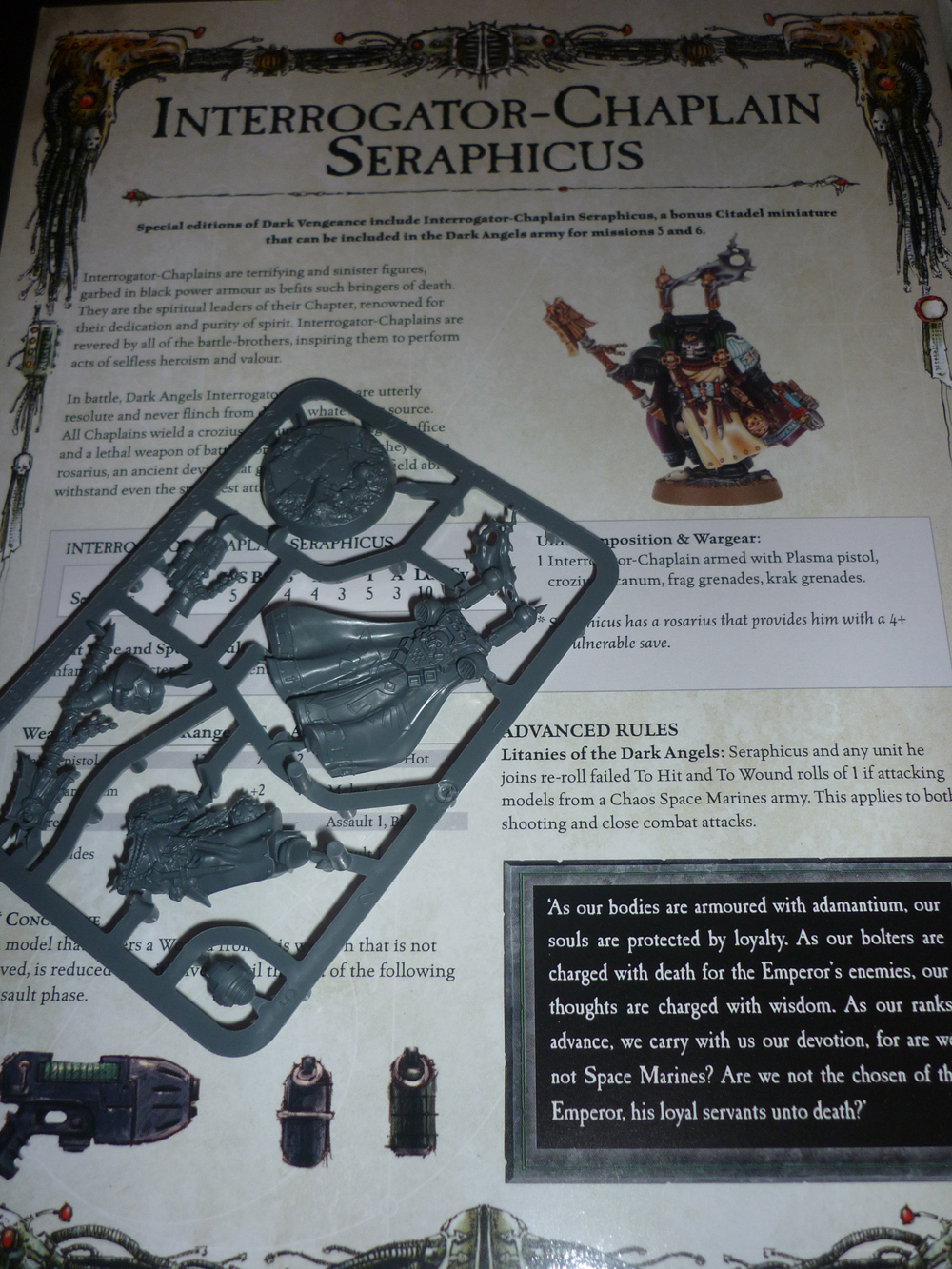
 (plus the exclusive limited edition Interrogator-Chaplain Seraphicus, see left; more on him later…)

1 x Dark Angels Company Master

1 x Dark Angels Librarian

5 x Deathwing Terminators

10 x Dark Angel Tactical Marines

3 x Ravenwing Bikes

And the bad guys…

1 x Chaos Space Marine Lord

6 x Chosen Chaos Space Marines, 1 x Hellbrute, and 20 x Chaos Cultists.

The level of detail throughout is superb, and there are lots of unique models, such as the character figures, that you won’t find anywhere else. The tactical marines and the chaos cultists have repeating models throughout their ranks, but approximately half of the miniatures are individual sculpts.

The Hellbrute dominates the set (see right), and there is wonderful contrast between the clean, sharp lines of the Dark Angels, and the baroque, somewhat rag-tag Chaos army.

And then, of course, is the reason for the ‘Limited Edition’ label…

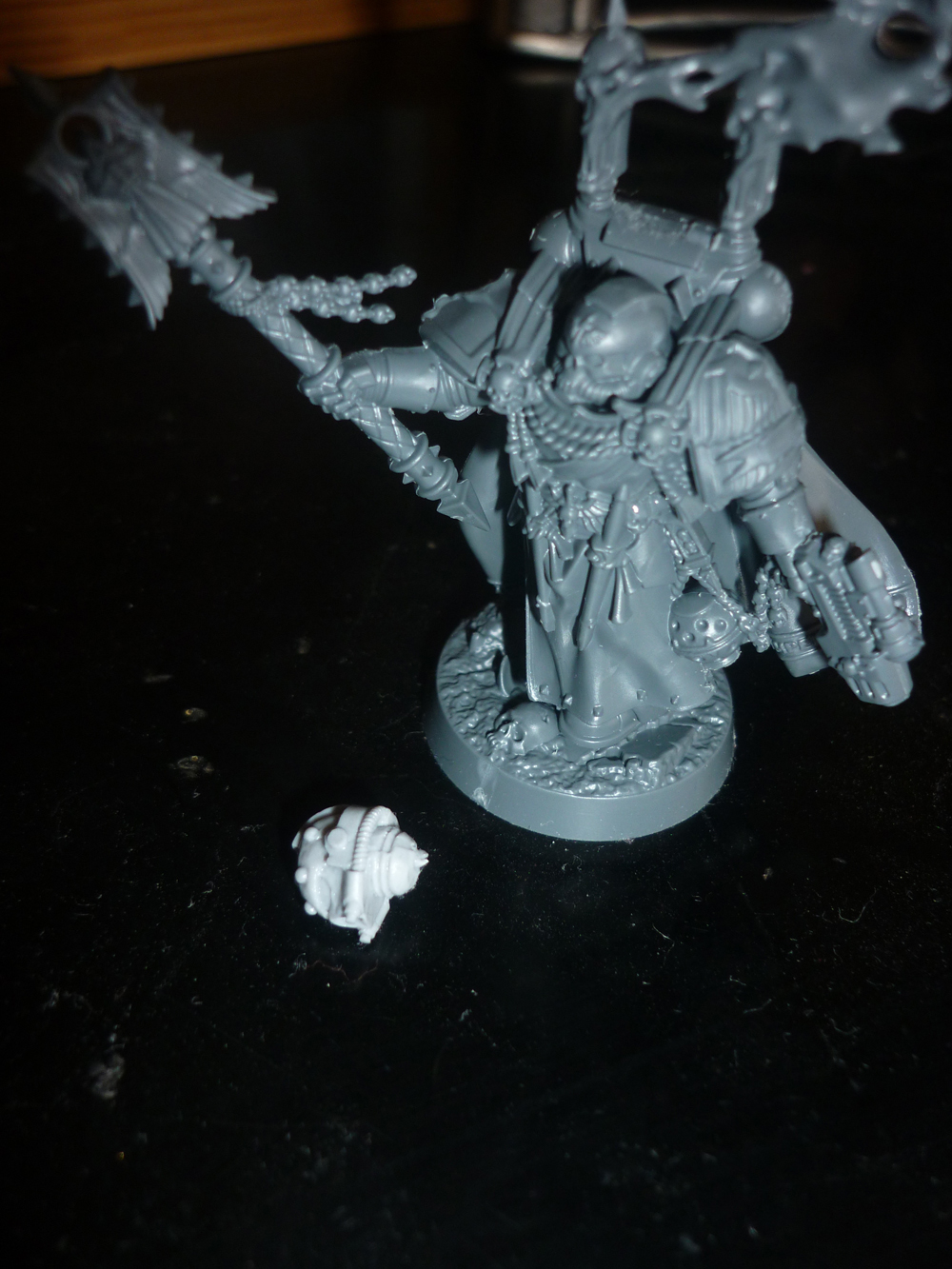
Introducing Interrogator-Chaplain Seraphicus!

Here he is put together, below left:

(the helmet by his base is a Mark 5 Heresy armour head, from a Forge World set, that I’m considering using instead of the chaplain’s skull-helm, for which I may have other plans in another Space Marine army I’m building…)

As far as I can gather, the Seraphicus figure is only available for a limited  time in the initial batch of DV sets, and future runs of the game box will  not feature the  chaplain. It is a superbly sculpted figure, with vast  amounts of detail, particularly impressive are the character’s torso, his  crozius arcanum and his skull-faced  helm.

As well as the  actual figure, which comes with a great  sculpted base,  you  get a unique character reference sheet  for Seraphicus  (see above left).

It is a canny marketing  trick, making a very desirable box set even more so.

I certainly fell for it!

No regrets here, though. In my opinion, this box set easily trumps the last  W40K release, Assault On Black Reach.  Along with the rule book and the usual templates and  blast markers, there is included a fantastic ‘How To Play’  booklet, with background to the storyline, explaining the conflict between the Dark Angels and the Crimson  Slaughter Chaos Space Marines (they have a great backstory), the major characters involved, and also featuring a sequence of six missions using the models in the set.

I will admit I am a bit of a Warhammer 40k novice, so I am particularly pleased at the way the booklets explain things in a very boiled-down style. Or, idiot-proof is  an equally valid description….

So here is the big question – is Warhammer 40,000: Dark Vengeance worth the outlay of hard-earned? Yes, definitely, and, if I were you, I’d make an effort to get hold of the Limited Edition set.

I’d go so far to say that this is the most impressive Games Workshop release since the Space Hulk box set came out in 2009.

Dark Vengeance is out now.

Andy Jamieson, Editor-in-Chief, geekzine 


Sep 102012
 

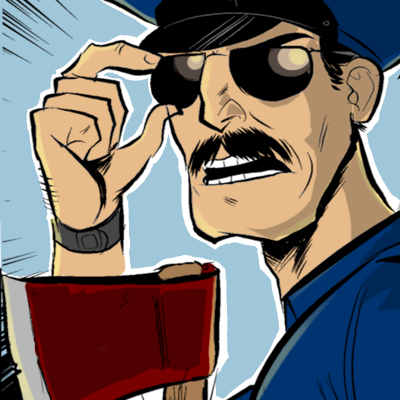
Axe Cop


It all started with two brothers messing around one day; they came up with idea of a cop who fights crime, with, you guessed it it, his axe.

Oh, sorry, I should also mention; the two brothers are called Ethan and Malachai Nicolle. Ethan was twenty-nine when all this started, and Malachai was just FIVE years old.

Now right away that might lead to you have some misgivings about the quality of this on-line comic (www.axecop.com).
Forget em.
Axe Cop is one of the greatest things I have ever been introduced to.
(Thanks to a mean bearded old man with whom I work. Reluctantly.)

Malachai has one of the most vivid imaginations I’ve ever come across, and Ethan skillfully crafts that outpouring of creativity into one of the funniest things I’ve ever read.
I will write a full blown review of Axe Cop soon, but until then you can check out the comic on-line, and feast your eyes on my interview with the excellent Ethan Nicolle, artist of Axe Cop…


Kate West: Your website says that you have no formal training as an artist, and you mentioned in one of
your video posts that you were Malachai’s age when you started drawing; have you always
wanted to draw comics? Do you think of particular comic or artist when you think of what
inspired you to draw?

Ethan Nicolle:  I don’t remember starting drawing.  I know I was doing it at about the time I was learning to talk because my mom has cassette recordings of her drawing with me and you can hear her saying “circle” then baby me tries to say circle as she holds my hand and draws a circle on a small chalkboard.  She tells me it didn’t take long for me to start drawing everything myself.  She says I just lit up when I discovered that illustration was possible and it has been something that has fascinated me my entire life.  I did not go to art school but in full disclosure I did do two terms at my local community college as an art major then I quit.  I don’t count that much toward what formed me as an artist because it was mostly a lot of the teacher just having us sit there and do art while she sat in her office, which is what I would have been doing anyway.  I did ask professionals constantly what I needed (to) work on and I sought out to work on those things… anatomy, perspective, layout, design, etc.  I always wanted to go to art school because I do think that if I had gone to a good one I would be a tighter artist today, but I only wanted to go to a really good school, yet I did not want to go into debt for it, so in the mean time I just tried to teach myself as best I could.  Before I managed to pull off art school my art took over my life on its own.

KW: You obviously have a great relationship with Malachai; do you think he’s been influenced by
you in that he might wanna carry on in the comics business as an adult?

EN: I don’t know how it will affect him in the future, but right now Axe Cop is much more of an activity we do when I visit rather than a profession to him.  I don’t think his career goals are big on his mind, and I am totally fine with that.  If I had to guess, I see him doing something much more technical when he gets older, but who knows what will happen.  Before Axe Cop Malachai didn’t read comics.  It wasn’t until Dark Horse started giving him free comics to read after we had gotten a publishing deal with them that he even started to crack them open altogether… and there are so few comics that are appropriate for him to read that it was never a world I planned on involving him in until maybe when he got older.  I never would have imagined we would be sitting at conventions signing books together.

KW: Do you have plans for any other series coming up? Or is Axe Cop still your main focus?

EN: Axe Cop is my main focus for sure, but I have never been a one project guy.  I have a lot of other stuff in me I need to get out and I have tried my best to do it while staying on top of Axe Cop, which is a lot of work.  In about a year and a half of Axe Cop we have produced enough material for three trade paperbacks.  On the side I still work on pitch ideas for animated TV shows when I can.  I also have recently taken a more bold step and started a second web comic that is written and drawn by me and colored by the talented Noah Maas.  It’s called Bearmageddon.  It only started a couple weeks ago and I can only put out two pages a week while I am putting out three a week of Axe Cop but I am very proud of it so far and it has had a great response.  If anyone would like to check it out they can visit www.bearmageddon.com

KW: If there ever was an Axe Cop movie, who would you like to play Axe Cop?

EN: I get this question a lot and I never have a real good answer.  That’s because when I look at Axe Cop I don’t see a celebrity… I see Axe Cop.  He is definitely a Burt Reynolds or Tom Selleck archetype, but I would not necessarily want him played by either of them.  I would rather let the surrounding characters be celebrity cameos and have Axe Cop himself be an unknown who is good at being dead serious, is buff, has a nice square jaw and can pull off a great moustache.

KW:  Are there any other comics, online or in print that you would recommend to your fans?

EN: Yes, for web comics definitely Dr. McNinja and Ratfist.  Both great comics made by good friends of mine.  Ratfist actually finished posting recently but I believe you can still read it.  I also really dig REmind by Jason Brubaker.  Some of my favorite print comics are the Goon, Walking Dead, just about any Doug TenNapel graphic novel and I have been digging the Invincble and Chew a bit too.  I also really love art books and one my all time favorites is the Daily Zoo by Chris Ayers.  I actually have started a ritual called “RecomMonday” on the Axe Cop Blog where I post a new thing I love and recommend every Monday and talked about the Daily Zoo last week if people want to know more.

KW:  Who is your favourite Axe Cop character?

EN: I assume you mean besides Axe Cop.  I have a lot of love for Baby Man and Sockarang.  I thought Malachai really loved the Moon Warriors until he killed them with a bear god.

KW: Ralph Wrinkles, Presty the pug, Army Chihuahua; Malachai seems to like dogs, does he have
one? And if so what kind?

EN: Yes, the family dog’s name is Rofie and it is some kind of mix they got from an animal shelter.  Definitely some terrier in it… not really sure what the heck it is really, but Rofie is a very sweet, calm dog.  Presty is named after Preston, a Pug that lives next door and yaps through the fence anytime we enter the back yard.  Ralph Wrinkles is based on a stuffed dog I got for Christmas when I was six, then I gave to  Malachai for Christmas when he was five.  I assume Army Chihuahua comes from his exposure to these obnoxious Chihuahua movies that keep coming out.  He and I actually worked on a story recently where all of the dog characters go on an adventure together along with a new dog character.  I’m not sure if we wrote enough for a complete story or not but I’m hoping to make it an upcoming story arch on the site at some point.

KW:  Have you ever thought that you might call it a day with Axe Cop, or do you enjoy it as much as
when you made the first episode?

EN: There is of course always going to be days when it just feels like work, as with any job, but all in all it remains a blast for me and it still gives me plenty of laughs.  The thing about this profession is that you don’t pick your projects so much as your projects pick you. My only plan is to not make any plans at this point.  I usually say I did not plan for Axe Cop to begin so I am not going to plan for it to end.  Axe Cop found me, and when he is done he will probably hug me and fly off like Pete’s Dragon.

KW:  So, I’ve seen and heard that there is to be an Axe Cop game, anything at all you can tell us
about that? Or is it all still very ssssshhh?

EN: All I can really say is that many video game companies are very interested, but beyond that I’m as eager as you are to know who is going to be the one brave enough to make the coolest video game in the last hundred years, and what it will be like.

KW:  Is Axe Cop mad that the God of Bears ate the moon warriors?

EN: I think it is safe to say that Axe Cop is mad at all evil… though his morality in recent comics has been questionable… I think he’s mad for sure, and when he needs to team up with the Moon Warriors I assume he will just go chop the God of All Bears’ stomach open and pull them out, but I really don’t know.  That’s all up to Malachai.  We truly may never see them again.  That is why we read Axe Cop, because we literally have no idea what is going to happen next.

Interview conducted by the ever-exotic Kate “Mae” West.
If you haven’t already, do the next sensible thing and check out www.axecop.com.
There are currently three Axe Cop trade-paperback volumes available, published by Dark Horse Comics.