Andy Jamieson

Sometime Geek Overlord, bi-monthly Dungeon Master, part-time care worker, reigning Husband of the Year, & full-time daddy. Also, proficient proverbial juggler.

Nov 092011
 

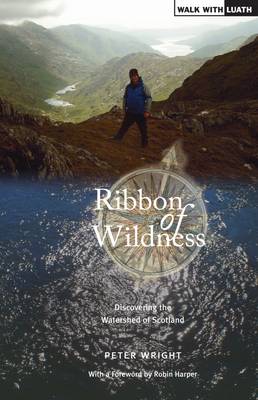
Peter Wright is the author of Ribbon of Wildness: Discovering the Watershed of Scotland, published by Luath Press, £14.99, out now.


What is the Watershed of Scotland?

Well imagine you are a raindrop about to land on Scotland – your destiny dear raindrop, is that by bog, burn and river, you will end up in either the North Sea or the Atlantic Ocean. Which it is to be, will depend on which side of the Watershed you land. Simple as that! A geographic feature in our landscape created entirely by the hand of nature, which hasn’t changed in thousands of years. And oddly enough, I am one of the first to define and describe it geographically.

What inspired you to write Ribbon of Wildness?

In the 64 days of walking it took me to complete this epic in 2005, almost all of it solo and off track, I had a lot of time to ponder what I was experiencing. I posed the question: “well, what does it all add up to?” And in my magnificent solitude, the phrase Ribbon of Wildness kept asserting itself in my mind. I found I was experiencing largely continuous wildness in this 1,200km of bog, rock, mountain, moor and forest, running from one end of Scotland to the other. Awesome! So I reckoned this would be something to share more widely, and then set out to write the book. My research all served to support this assertion about wildness, in so many different ways. Not just an abstract hunch – plenty of evidence.

What challenges did the book present?

Firstly, finding a structure – but I just used the 1,200km Watershed, as I had experienced it, south to north. Then endless research through Scottish Natural Heritage data on designated and protected areas – all 90 of them. Land-use followed, so off to Aberdeen to the McAullay Institute (now Hutton Institute), to demonstrate the Watershed’s general lack of agricultural suitabliity. The meanings of hill names, as evidence of how our ancestors viewed these heights, was followed by literary references. All these, and so much more were the challenges, but all of it great fun to ponder, explore and get down on paper. But as an environmental book, or one about landscape of this feature, it had never been done before.

How long did it take to complete?

It took about 2 years to research, write, and get it into the right format for the publisher. And then another year or so to wait for publication. Patience followed persistence – but what a result!

Is there any particular aspect of the book that you are most proud of?

Yes, writing the book in the first place – I left school at 14, with not a qualification to my name. Then being able to come up with something truly original to write about and share. And finally, that I know the reader will be taken on a great journey through some of the best of Scotland, as they leaf through the pages I have written – it will open new vistas for them, give a new connectedness to their earlier outdoor experiences. Its enabled me to share my sense of intimacy with a vast swathe of Scottish landscape. Not many people get to do that.

Are you working on another book?

Yes, just completed the text and new preface for the second print-run of Ribbon of Wildness.

Started working on a slimmer version based around day and weekend walks – really opening up the possibilites for those who love to get their boots on. Probably to be called something like ‘Walking with Wildness on the Watershed’. Target 2013. ‘Waking the Sleeping Giant’ will be the theme for a children`s book, which I hope to knock into shape around the same time. And finally, with 2014 as the centenary of the death of John Muir, I’m beginning to look at how I might generate the material necesary for a deluxe coffee table version. Not short of plans and ideas.

Do you have a favourite book?

Can I claim 2 right now? Clear Waters Rising by Nicholas Crane, and Highland River by Neill Gunn.


Thank you to Peter for taking the time to answer the Geekzine’s questions.

Check Peter’s website for upcoming events and information: www.ribbonofwildness.co.uk

Andy Jamieson, Editor

Nov 052011
 

The Edinburgh Bookshop, one of Edinburgh’s best kept secrets is 5 today. Congratulations to Malcolm and Vanessa Robertson, the proprietors.

To commemorate the event, Dr Seuss’ Cat in the Hat will be entertaining for most of the day, along with various story times, and other such delights.

Where: The Edinburgh Bookshop, 219 Bruntsfield Place, Edinburgh, EH10 4DH, tel: 0131 447

When: All day, 9.15am to 5pm.

Nov 042011
 

Tron Legacy (OST) by Daft Punk 

(Walt Disney Records, 2010, CD, out now, £: shop around for a bargain)

I remember back in the pre-production phase of Tron Legacy, when it was announced that Daft Punk had been commissioned to do the soundtrack for the film. Part of me felt it was a far too obvious choice, whilst at the same time thinking that it might just be a move of extremely sound judgement…

Everything worked out fine in the end. The TL soundtrack is a thing of beauty and awe. The music was one of Tron Legacy‘s most impressive aspects and integrated so well into the visuals that they seemed symbiotic. I remember sitting in the cinema, of the winter of 2010, being immediately blown away by the opening salvo of Overture and The Grid, and The Son Of Flynn. Track four (Recognizer) on the soundtrack was the defining moment, initially, for me in the cinema; it was the scene where Sam gets caught by the Recognizer – and it looked amazing and sounded incredible. I remember thinking “this is one of the best scenes in a movie I think I’ve seen” – I was pretty caught up in the film by this point, so please forgive my fanboy gush. The film is, essentially, a sequence of beautifully staged and filmed set-pieces put to stunning music. And by gosh it works so well.

Daft Punk (comprising the duo of Thomas Bangalter and Guy-Manuel de Homem-Christo) have produced a superb soundtrack that works equally well as a standalone record – they balance their trademark electronica with sweeping orchestral work, and the two styles mesh wonderfully (see the amazing tracks 9: Outlands and, more so, 10: Adagio For Tron as testament). DP really hit their stride with the more conventional club segment (where, in the film, the duo made their unusually memorable cameos) of tracks End Of Line and Derezzed, which are the nearest to their usual sound.

The last few tracks have the bombastic swagger you would expect from a soundtrack to a big Hollywood blockbuster, but even working within this frame, Daft Punk deliver. By track 22: Finale, you should be well and truly hooked, and will be intent on listening to the soundtrack again. And again…

This is an essential purchase for fans of Tron and/or Daft Punk, and anyone with taste, I think it fair to say.

Andy Jamieson, Editor 

Nov 012011
 

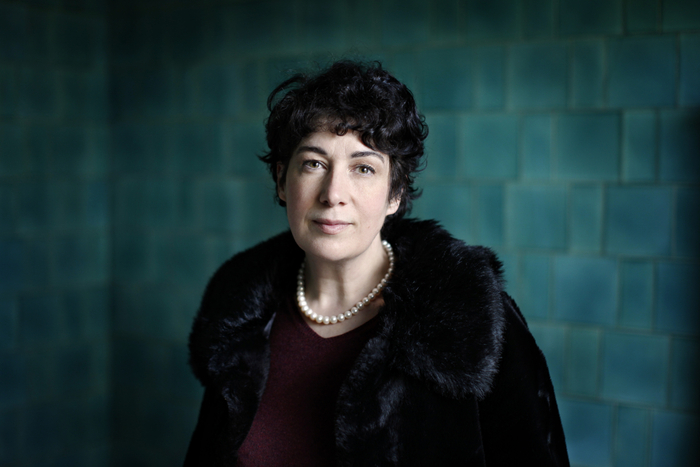
In October I had the opportunity to interview author Joanne Harris. Most of us will know her name due to the Chocolat movie. Of late she has broken into the Young Adult market with her Norse mythology fantasy title, Runemarks (out now, £7.99, published by Corgi). The sequel to that book, Runelight, was released in October (Doubleday hardback, £14.99), and will be reviewed soon on this website.

Andy Jamieson, Editor


Andy Jamieson: After all the success you’ve had over your career, what continues to inspire you as a writer?

Joanne Harris: I don’t think success means inspiration has to run dry. If anything, my success has taken me to places I would never have seen otherwise and introduced me to people I would never have had the chance to meet. I find that the more people I meet, the more new things I experience, the more stories I collect.

AJ: With Runemarks and the upcoming Runelight, you have now established yourself as a fantasy writer – what is it about the genre that appeals to you?

JA: I don’t usually tend to think of books in terms of genre. It’s liberating to be able to tap into the world of fantasy – to re-create mythologies, new races, languages, other worlds, magical systems – but I have been writing modern, magical fairytales in my mainstream, “literary” books as well. Superficially, this may seem like a departure, but thematically, I don’t think it is.

AJ: The fantasy genre is a thriving marketplace, particularly for the Young Adult audience. What do you feel sets the Rune books apart from other fantasy series?

JA: I think a lot of fantasy books, especially the ones that deal with mythology, can be quite earnest, even humourless. I’d like to think that my books give back to the myths the comic, irreverent slant they originally had, whilst hopefully retaining some of the important human themes as well.

AJ: What plans do you have for the series?

JA: I don’t know; but I’m having too much fun with these books to stop writing them just yet.

AJ: The Rune books revolve heavily around Norse mythology. What challenges did this provide you with?

JA: The greatest one, I think, was the merging of mythological and linguistic authenticity (runes, language, kennings, original texts and incantations, etc) with pure invention, deliberate anachronisms and contemporary themes. The characters were another challenge; easy to take into a more modern context, as Norse myths are already so accessible to modern sensibilities. But I wanted to make the characters mine, too, whilst retaining their traditional aspects.

AJ: Do you have any plans for other fantasy projects, aside from the Rune series?

JA: Maybe later. For the moment I can’t see that far.

AJ: Do you read much in the way of fantasy, SF, or horror?

JA: Yes, all the time. It’s what I read for pleasure, when I’m not reading as a reviewer or a literary prize judge.

AJ: What was the last book that you read, and why did you choose it?

JA: Murakami’s new book,  IQ84.  He’s such an original, fascinating, idiosyncratic writer. I love his work.

AJ: Out of everything you’ve worked on, is there one particular project that you think would be suited for a movie or tv series (that hasn’t been done already)? 

JA: Depending on the director, I’d love to see THE LOLLIPOP SHOES on the big screen. I see it as a Guillermo del Toro movie; dark; cruel; beautiful.


Thank you to Joanne for her time.

Interview conducted by Andy Jamieson, Editor

Oct 092011
 

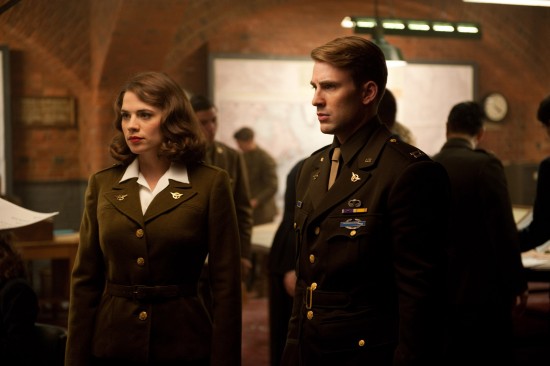
Last month I had the fortune to interview John Higgins, a vastly experienced lighting engineer in the film industry, and his most recently released work has been on the Captain America: The First Avenger movie, as Chief Lighting Director. The look of the movie is beautiful, with a golden-era Hollywood glow to the scenes (the above scene is a good example). You might not know his name, but John has worked on more films than you know you know… If you get what I mean…  (just check his profile on IMDb)

Andy Jamieson: What challenges did you and your department face with Captain America? 

John Higgins: The challenges on Captain America were many. There were well over a hundred sets to be completed over around ninety days and some of these sets were vast and also involved night work. The exterior Hydra Factory was an old MoD propellant factory in Wales and was a massive planning and preparation task. There were tons of equipment with around twelve mobile generators, Industrial cranes and miles of cabling. A lot of the stage sets were also very complex.

AJ: Did you at any point refer to any of the original comic-books? Were director Joe Johnston and cinematographer Shelly Johnson quite specific on how they wanted the film to look? 

JH: The “look” of the film was determined by Joe, Shelly and Rick Heinrichs the Production Designer whose concept drawings were fantastic. I am not sure there were any references to the original comic books as I never saw any around in the Art Department. Once this concept was signed off on we had a great guide as to how a particular set or sequence should look.

AJ: You’ve worked on an incredibly broad range of movies, crossing many genres, including horror, action, and musicals. Which type of productions do you find the most enjoyable to work on, and why? 

JH: Most films are very enjoyable to work on. It would be impossible to single one out as they all develop their own feeling and dynamic.

AJ: Is there one film in particular, out of all the productions that you’ve worked on, that you are most proud of? 

JH: I suppose the film I am most proud of would be my first 35 mm feature which was 1984. It was technically very complex but that made it very interesting and I learned a lot on that film.

AJ: Out of all the film directors you’ve worked with, are there any that you have been particularly impressed by?

JH: Most directors are very impressive as they have so much call on their time. Every department has questions which in the end can only be decided by the director. One director once told me the most frightening thing is when he walks on to the set on Day 1 and all the technicians are getting their stuff ready and they are all busy but there will come a moment when it all turns to him, a very scary moment. There is one director I will mention and that is Tim Burton. I have done three films with him, Sleepy Hollow, Charlie And The Chocolate Factory and Sweeney Todd. He is amazing to work with.

AJ: How was your experience of working on the first Harry Potter film? 

JH: The first Harry Potter was great fun with a really good atmosphere on the set. It had a huge cast of children so the production had to provide classrooms, tutors and chaperones at the studios for the several hundred children.

AJ: How long have you worked in the film industry and how did you start out? 

JH: I started in the business in 1980 and it was by accident. I saw an advertisement in a paper for technicians for a small film studio which was opening and I was working on the oil rigs and had a lot of time off so I thought it would be fun and some extra money. I never returned to the rigs. I did two big films in a very junior capacity and then the commercials and TV dramas. One can learn a lot with that amount of variety. One of the great things about what I do is the variety of work and on every project there is the opportunity to learn more. The format is changing in cameras with a lot of films now shot on a digital format rather than film. There is also the popularity of 3D now with a lot of big budget productions being shot 3D or shot 2D and converted in post.

AJ: What is it you most enjoy about your work? 

JH: I am currently in preparation for the 23rd Bond film and the Director of Photography is Roger Deakins who was the DP on 1984, we have worked together on a lot of films so it is great to work with him again.

Thank you to John for taking the time out of his busy schedule to answer my questions. Andy Jamieson, Editor

To read the Geekzine review of Captain America, click here.

Oct 092011


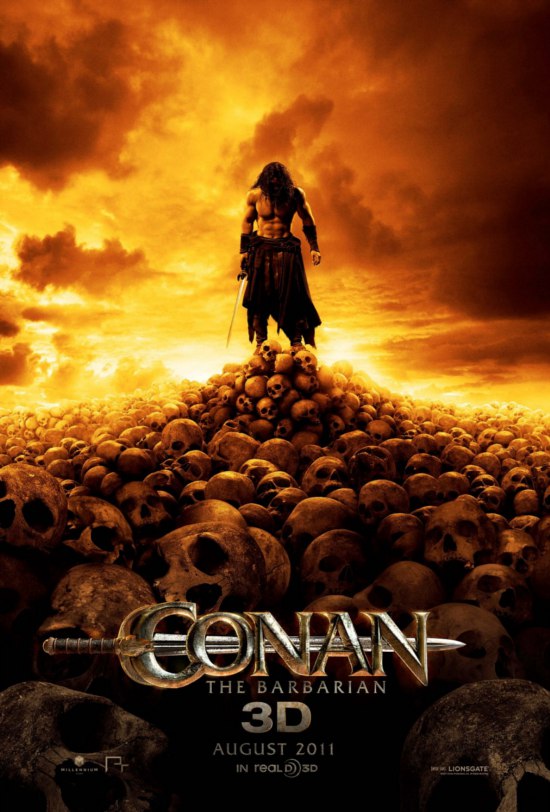
Conan The Barbarian (15)

Released in the UK 24th August 2011. Running Time: 113 mins.

Directed by Marcus Nispel, written by Thomas Dean Donnelly, Joshua Oppenheimer & Sean Hood.

(Adapted from the Conan stories of Robert E. Howard)

Starring: Jason Momoa, Steven Lang, Rachel Nichols, Rose McGowan & Ron Perlman. Narrated by Morgan Freeman.

By Crom! Conan the Barbarian is not a good film. It may have action and blood spurts aplenty but what captivated readers so intensely in Robert E Howard’s novels was their heart and while in this Conan you’ll probably see your fair share of disembodied ones there is little or no real feeling.

The plot is based on Howard’s original novels and follows the orphaned barbarian Conan (Jason Momoa) as he seeks revenge on the man who killed his father and tribe. He encounters a highly annoying female monk along the way and finds himself protecting her from the very same man he is hunting and his sadistic witch daughter who wish to summon an army of the dead to conquer the world.

After proving his ability to captivate audiences in Game of Thrones, it’s disappointing that, here, Momoa is little more than a slab of, albeit very attractive, meat. He manages action scenes well and is believable as the one-man barbarian army but the lifeless script gives him little opportunity to shine in any way other than the glisten of his well-oiled chest.

Rose MacGowan is the only main cast-member to really show anything resembling a strong performance. And while that’s largely down to pantomime villainy and a makeover which gives her the semblance of the terrifying love child of Lady Gaga and Freddy Krueger, she is entertaining. There are supporting performances that show promise from Said Taghmaoui ( Lost ) as slippery thief Ela-Shan and Nonso Anozie (soon to be Game of Thrones’ Xaro Xhoan Daxos) as Conan’s closest friend, but both are left completely under-developed.

Conan the Barbarian looks good but that’s pretty much all there is to it. When even Ron Perlman’s bellowing and delivering of a DIY caesarean can’t save the audience from boredom it’s a sure sign that the film really isn’t worth your time.

Genevieve Taylor, Film Journalist