Andy Jamieson

Sometime Geek Overlord, bi-monthly Dungeon Master, part-time care worker, reigning Husband of the Year, & full-time daddy. Also, proficient proverbial juggler.

Aug 252011
 

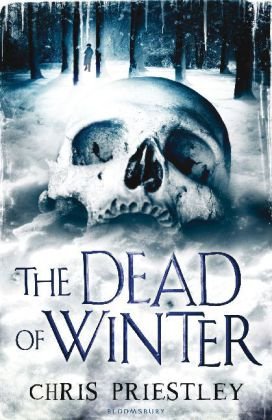
The Dead Of Winter by Chris Priestley (published by Bloomsbury, PB £6.99 – out October 2011)

Edgar Allan Poe. M.R. James. Wilkie Collins. Now we can add Chris Priestley to that list, as an esteemed storyteller of ghostly delights. Following on from his Tales of Terror trilogy (of which this book is a great companion piece to), Priestley’s latest is a novel of rich, gothic-laced atmosphere; young orphan, Michael, moves to the country manor of Hawton Mere, set amongst misty marshland, to live with his guardian, the sickly and troubled Sir Stephen.

But something is not right at the estate and, from the off, Michael is certain that there is a ghoulish mystery waiting to be uncovered…

Michael’s adventure is gripping, and by the end you will be feverishly turning pages to discover what happens next. This is an exceptionally well-crafted book, and more than matches the high standard of the Terror books. It’s simply a great pleasure to read and reiterates that Priestley is very, very good at what he does – there are not many writers out there who are as talented as this here fellow. I read this over the Christmas period of December 2010, when it was particularly snowy in Edinburgh – there couldn’t have been a more ideal time to read this book – and I think I will perhaps read it every Christmas from now on!

If you’re looking for a new writer to follow, Chris Priestley is your man.

Andy Jamieson, Editor


Aug 242011
 

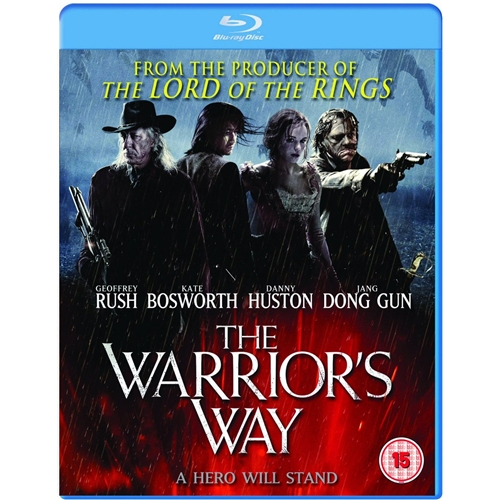
The Warrior’s Way (15)

2010. Running time: 100 mins approx.

Written & directed by Sngmoo Lee

Starring: Dong-gun Jang, Kate Bosworth, Geoffrey Rush, Tony Cox, Lung Ti and Danny Huston

As genre mash-ups go this is a not-bad effort. Debut helmer, Sngmoo Lee, lays on the style thick and heavy, and most of the time, he does it well. South Korean mega-star Dong-gun Jang is Yuan, an assassin who ascends to be the greatest swordsman in the world ever (achieved with some wit in the opening scene). He is tasked by his clan, the Silent Flute, to wipeout a rival clan; he does so but stops short of killing the final clan member – a wee baby girl. He goes on the run from China, all the way to the American Wild West Badlands of the late 1800’s. He heads to the old shanty town of Lode, where his old mentor emigrated. Yuan arrives to find that ‘Smiley’ (as the locals dubbed him) is now dead, and his laundry press business lies abandoned. Yuan sets about reopening the laundry, with the aid of feisty Lynne (Kate Bosworth, looking incredibly like a young Katherine Hepburn…). Lode lies in the shadow of an old ferris wheel, and the town is populated by the remnants of a troupe of travelling circus performers, led by Tony Cox’s potty-mouthed Eight-Ball and Geoffrey Rush’s alcoholic sharp-shooter, Ronald.

But Lode is plagued by a gang of bandits, led by Danny Huston’s Civil War veteran, the ‘Colonel’, who has unfinished business with Bosworth’s plucky Lynne… When they next ride into town, Yuan is drawn into the town’s struggle with the bandits, knowing full well that if he draws his sword, his clan will know where to find him; you see, cleverly, the Silent Flute have a talent for tracking each other by their swords – if Yuan draws his sword from its sheath, they will instantly know where he is. Cobblers, yes, but I just went with it.

The final third is a chop-sock-fest of cowboys vs circus performers vs ninjas, and zips along. The Warrior’s Way is a bizarre film and slightly misshapen in conception, but is mostly fun, and Rush and Huston are on fine ham-and-pineapple form to keep things going at a pace. Dong-gun Jang pushes the definition of stoic to its limit with his mostly silent performance. He is so restrained he looks constipated most of the time. When it matters, he slices stuff up in a rather impressive fashion and, in one of the film’s better moments, impales a man in the eye with a frozen fish…

You want to see it now, eh?

Andy Jamieson, Editor

Aug 242011
 

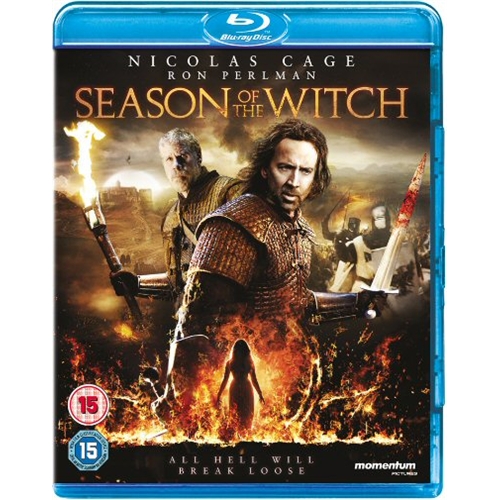
Season Of The Witch (15)

2011. 95 mins approx.

Directed by Dominic Sena, written by Bragi F. Schut

Starring: Nicolas Cage, Ron Perlman, Stephen Campbell Moore, Stephen Graham, Ulrich Thomsen, Robert Sheehan, Claire Foy and Christopher Lee

I had every right to expect that this would be bobbins. Perhaps that’s why I enjoyed it so much! Low expectations can generally be a fine way to approach a movie, and an ideal frame of mind when approaching most of Nic Cage’s recent output…

Season Of The Witch is lots of hokey fun, from its chewy faux-medieval dialogue – “I’ll take the 300 on the left, you take the 300 on the right” – to Nicolas Cage’s silly helmet in the opening sequence. Veteran knights Behmen (Cage, in another incredible hairpiece) and Felson (Perlman, on top form) retire from the crusades when it becomes apparent that killing women and children is no fun. On their way home they come across a city in the grip of the plague. A young woman has been captured (Claire Foy, as far away from Little Dorrit as possible…) and accused of being the ‘Black Witch’ responsible. Our deserting knights are caught by the city watch and are charged by Cardinal D’Ambroise (a Christopher Lee cameo, with the great man almost hidden by hideously fascinating prosthetics) with taking the witch to the abbey of Severac where she will be tried.

Along for the ride are Ulrich Thomsen’s weary knight, Eckhart, Robert Sheehan (he of tv’s Misfits fame) as young wannabe knight, Kay, Stephen Graham’s slippery guide, Hagamar, and Stephen Campbell Moore’s righteous priest, Debelzaq. Each actor does a decent job without stealing the limelight from Cage and Perlman, whose onscreen chemistry is lots of fun (on this showing, these two should work together more often). The camaraderie sparkles between the men-on-a-mission and they are faced by quite a decent sequence of set-pieces on their way to Severac; a thrilling chase through a network of tunnels leading to a mass plague grave; an attack by wolves-who-aren’t quite-wolves; a rickety old bridge over a cavern… A fair assembly of adventure cliches convincingly brought to life by Schut’s competent script and Dominic Sena’s stylish direction. He gets the tone about right, with a restrained use of CGI, and a hefty mix of action and suspense. The finale at Severac is brilliantly done and, I’ll admit, I was surprised at the ending.

If you like big, daft, fantasy films, I’d recommend giving it a go.

Andy Jamieson, Editor

Aug 242011


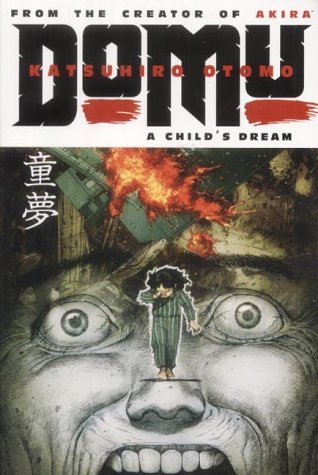
Domu: A Child’s Dream by Katsuhiro Otomo

(published by Titan Books at £12.99. It is currently reprinting)

A little girl and a crazy old man battle it out for the control of an apartment complex in suburban Japan. It might sound like a strange concept for a comic, but throw in some psychic powers, a very confused police force and the close-knit, slightly claustrophobic society within the apartment buildings, and you have the unlikely ingredients for a masterpiece.

Mostly everyone, even non-manga fans, has at some point heard of Akira, Katsuhiro Otomo’s legendary comic series and breakthrough anime film. For many in the west, it was Otomo’s Akira movie that introduced them to the pleasures of the complex art form that is manga.

And in Domu: A Child’s Dream, originally released in Japan in the early 1980’s before Akira, Otomo is at his best. His work is beautifully crafted; the lines and detail of each of the buildings within the apartment complex are so strong and sharp that they sometimes overshadow the characters, giving this otherwise staid architecture an overbearing presence on the storyline.

From their initial chance encounter in the courtyard of the complex, the tension gradually builds as the two opponents move against each other, either directly or by proxy. The old man is particularly malicious and mischievous, his child-like wickedness countered by the peculiar maturity of the little girl. As with any good tension-grinder, events spin out of control in a page-turning frenzy until they ultimately explode in a dazzling finale. As a reader you are never sure if the darker side of the residents’ nature is there because they’re being manipulated in this battle of wills or whether Otomo has more to say about society. Either way, this is a fascinating, engrossing read that is manga of the highest quality.


OTOMO FACTFILE:

– Born on April 14th 1954 in Miyagi Prefecture.

Domu was originally serialised in 1980, running for two years. When it was released in book form in 1983 it won the Nihon SF Taisho Award, which is the equivalent in Japan of the Nebula Award.

– The manga of Akira took eight years to complete. The movie came out before the manga was finished, similar to Hayao Miyazaki’s Nausicaä.

– In 1996, Otomo guest authored/pencilled Batman: Black & White #4.

– Otomo’s biggest film hit after Akira is the 2004 movie, Steamboy, a Victorian-era steampunk-esque adventure.


RECOMMENDED OTOMO:

The Legend Of Mother Sarah (1990) is a hard-to-find collection of fantasy adventure, in contrast to the grim SF of Akira.

Hipira: The Little Vampire (2001) is Otomo doing cutesy horror.


Stuart MacDougall, Bookseller, Waterstone’s Edinburgh West End 

Aug 242011
 

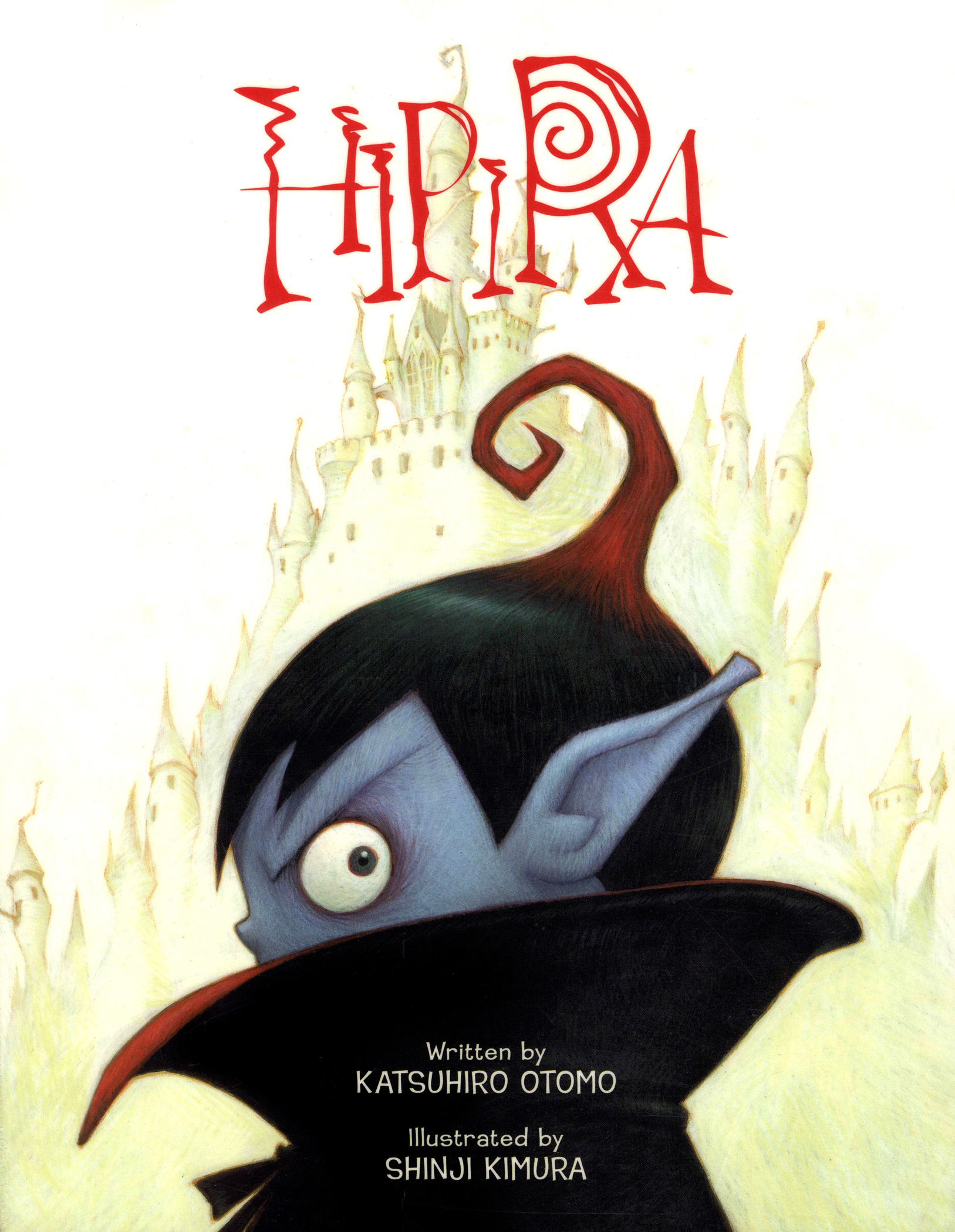
Hipira written by Katsuhiro Otomo & illustrated by Shinji Kimura

(first published in 2002 by DH Press, prices vary, U.S. import, out now)

After having read Otomo’s amazing Domu, I did a bit of research and discovered this little oddity (and happened to pick it up for a bargain price online…). Welcome to the wonderful world of Hipira, written by Akira legend Katsuhiro Otomo (just on story duties here) and beautifully illustrated by Shinji Kimura (a veteran artist whose credits include Studio Ghibli’s My Neighbour Totoro). It is ostensibly  a children’s picture book and is quite the weird delight. Kimura met Otomo whilst working on the latter’s Steamboy anime feature as a production artist. You can see why Otomo liked Kimura; his artwork is stunning, rendering Otomo’s peculiar tale of a little vampire’s search for friendship all the more obscure. There are five short tales within, and you get the vibe that perhaps the creative pair were testing the water for a potential series. And Hipira was actually turned into a five part anime series in 2009. A series of children’s books would, however, go down a treat, so here’s hoping.

If you can find a copy, it is a deluxe must-have.

Andy Jamieson, Editor

Aug 242011
 

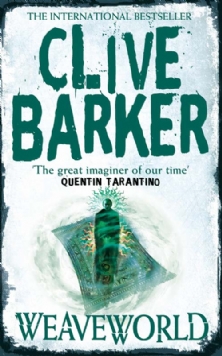
Weaveworld by Clive Barker (HarperVoyager, £7.99, out now)

Stunning. Incredible. I’d go on but you get the idea. This is quite simply one of the best books I think I have ever read. Fanboy gushing aside, you don’t get to read many of those, I think it’s safe to agree. This title is over twenty years old now, but you wouldn’t think it from the freshness of the imagination on display. When Weaveworld was released it coincided with the launch of the original Hellraiser movie. A hell of a week for Clive Barker fans.

Weaveworld is an epic horror-fantasy-thriller-surrealist-painting of a book (it’s so good it’s hard to categorise) of dark melting genius, veined throughout with lush, rich detail that dazzles and indeed excites. Clive Barker conjures such vivid imagery with his words; to read this again is to be reminded of what an amazing talent he is. Writer, painter, film-maker… I happen to think that he has never really been given the true credit he deserves, a talent under-appreciated.

The story concerns one Calhoun Mooney, a young chap who is innocently enough drawn into the great adventure of his lifetime when he discovers a fantastical realm hidden within the weave of an old carpet… And what a world he discovers. There is o much detail to this book that I could never do it justice in a review. You really do have to just get on and read it. Truly, it is spectacular. Epic doesn’t come close.

This is a striking, bewitching read, a timeless literary feast of intense beauty. So good you’ll want to read it again and again.

Andy Jamieson, Editor