And so the 2013 Edinburgh International Film Festival rolls into town, boasting a typically diverse programme of foreign avant-garde cinema, mainstream Hollywood blockbusters and all that’s in between! Of particular interest to readers of this little webzine are a number of geek-friendly curiosities ranging from the fantastical to the frightening, and your humble Geekzine correspondent (me) will be there to review the films themselves (press restrictions allowing), as well as providing coverage of the general goings-on at this year’s festival.
Opening on 18th June with the UK première of Guy Pearce drama Breathe In, the festival will run for 12 days, and while there aren’t any major surprises in this year’s line-up (we at Geekzine HQ had been hoping for a screening of the new cut of Clive Barker’s Nightbreed – sadly ’twas not to be) there are a number of exciting cinematic prospects to be found in the EIFF’s voluminous programme of movies. Korean action thriller The Berlin File, Iranian sci-fi oddity Taboor and schlocky gore-fest Frankenstein’s Army (amongst many others) have all popped up on the Geekzine radar, along with the UK première of brand new Pixar prequel Monsters’ University. In short, it looks to be a very good year for sci-fi, fantasy and horror movies at the film festival, which is great news for us geeks!
So keep your eyes peeled in the coming days for reviews, reports and….well, that’s basically it. But we think that’s pretty good going! As ever, we welcome your comments, so why not let us know what you’re looking forward to at the Edinburgh International Film Festival 2013, and we’ll hopefully see you there!
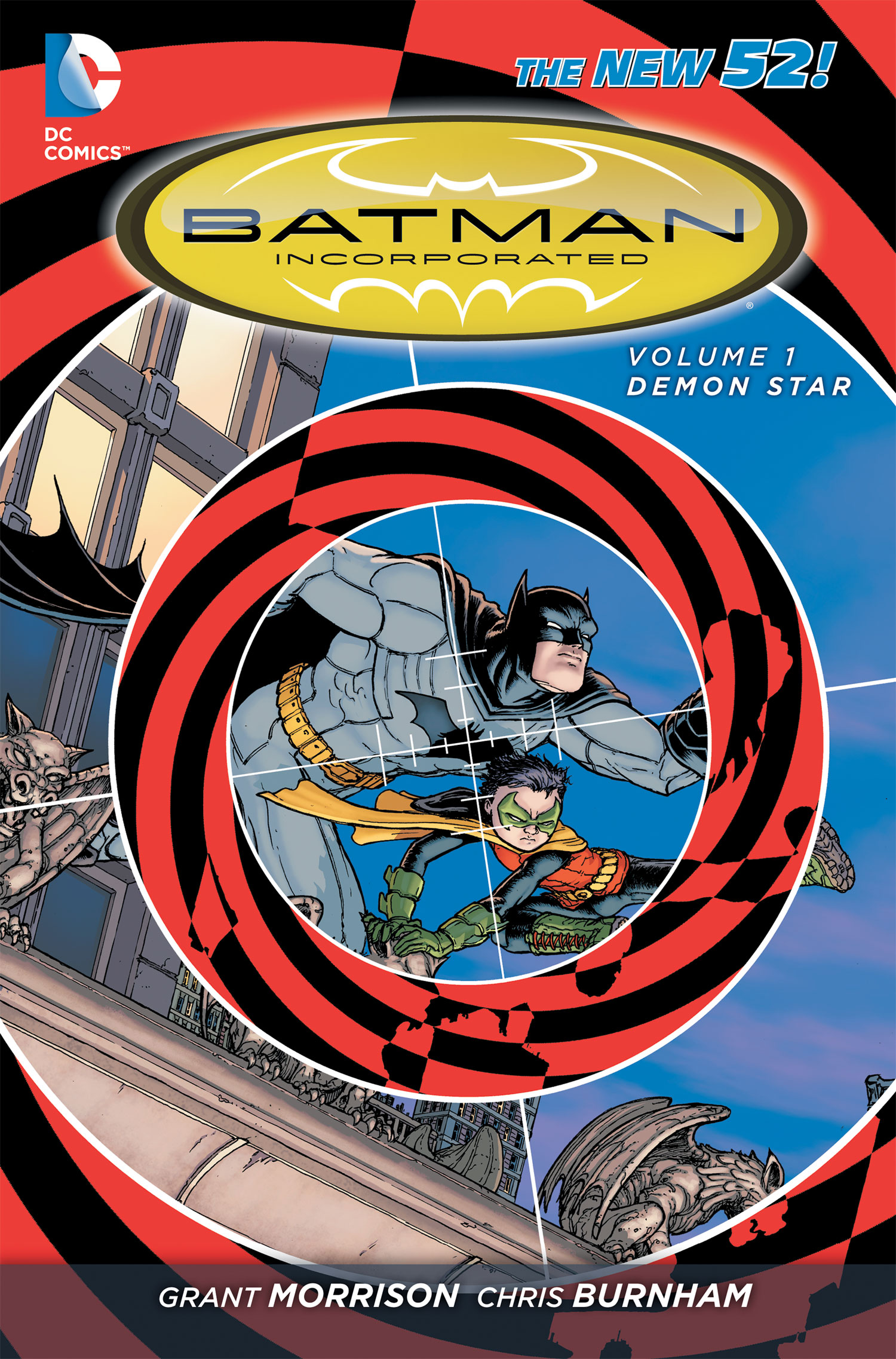
As mentioned in our review of its preceding volume, Demon Star – the second installment in Grant Morrison’s Batman Incorporated arc – has also been designated as volume 1 of the series. This is not a printing error, but a move designed to bring the series in line with DC’s “New 52” continuity. When the company-wide reboot occurred, Morrison’s latest Batman series (the grand finale to his seven year-run on the character) was still fourteen issues away from completion, and many fans feared that he would be forced to abandon the project altogether, or least make major revisions to the story line. Instead – somewhat surprisingly, given DC’s commitment to radically overhauling its key properties – it seems that Batman Incorporated has been allowed to continue with only minor cosmetic alterations. In fact, loaded references to previous story arcs in the first few pages of Demon Star suggest not only that Batman Incorporated is proceeding as planned, paying only the faintest of lip-service to “New 52” continuity, but that Morrison intends the series to serve as a climax for his entire seven year run on Batman, tying together all the various plot strands explored in the Batman & Son, Black Glove, RIP, Batman & Robin, Return of Bruce Wayne and Incorporated story arcs. It’s an incredibly ambitious undertaking, not least due to the intentionally fragmented narrative style which has characterised Morrison’s work on Batman right from the start, but if he pulls it off it’ll be a dazzling achievement.
The seven issues collected in Demon Star leave behind the episodic format of Batman Incorporated‘s first volume. We’re firmly in ‘arc’ territory here, with each issue adding another piece to the series’ vast mosaic, as the global Leviathan conspiracy, led by Talia al Ghul, sets its sights firmly on Gotham City. Bruce Wayne has created a monster of his own in the Batman Incorporated organisation, a mirror image of Leviathan with tendrils stretching around the world. Batman Inc’s Orwellian surveillance practices and forced conscription of agents are justified as necessary evils by its increasingly enigmatic founder, measures which must to taken to avert the future catastrophe he claims to have foreseen during his time-travelling in the Return of Bruce Wayne arc. Like players in an apocalyptic game of chess, Wayne and Talia deploy their pieces and execute their schemes, a situation further complicated by the bounty Talia has placed on the head of their son, Damien Wayne, in order to distract his father from the battle at hand.
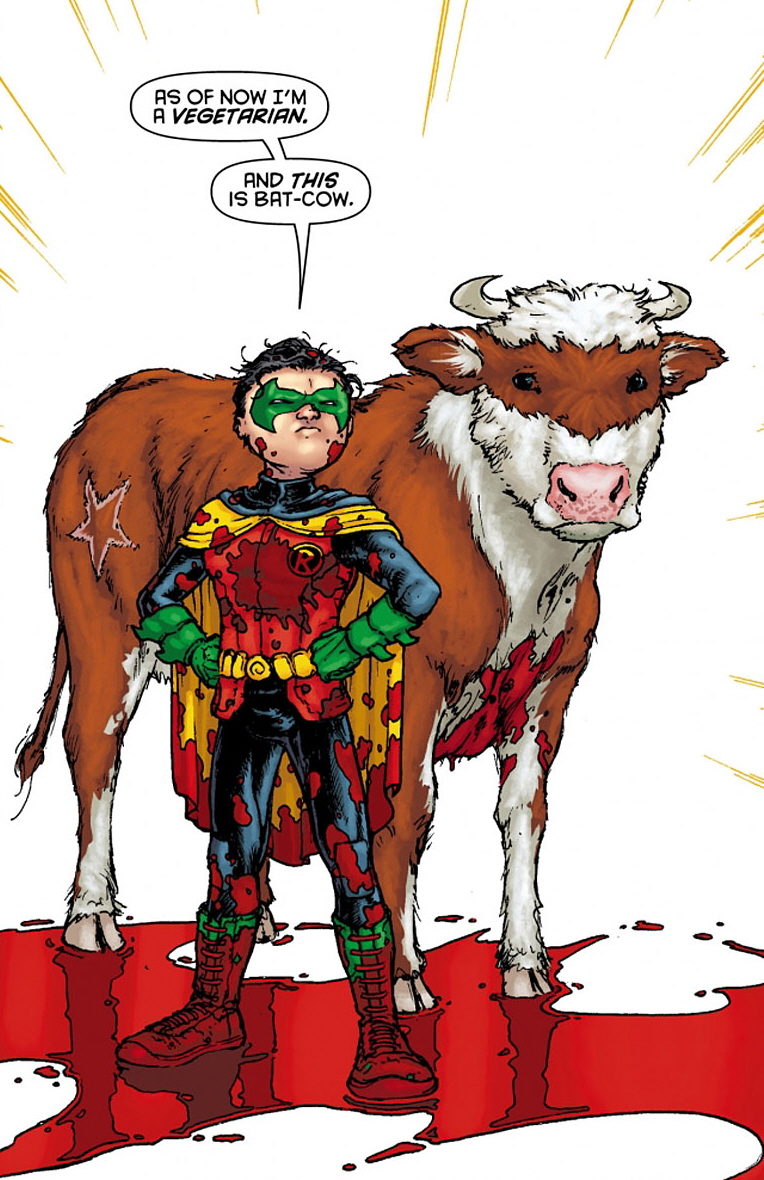
Reading Demon Star, it becomes apparent that references to characters and events from earlier in Morrison’s run are starting to crop up more frequently as Batman Incorporated approaches its conclusion. The supernatural undertones which formed a part of the Black Glove and RIP story lines have made a welcome return, and hints that something deeper and darker might lie behind the machinations of Leviathan suggest a hellish fate for Batman and his allies. There is also a brief return to the dystopian future Gotham where Damien Wayne’s Batman literally deals with the devil (first sketched by Morrison six years ago in issue #666), revealed here to be one possible future which Bruce Wayne saw whilst travelling through time. Morrison clearly relishes the opportunity to blend a variety of styles from across eight decades of Bat-history (including even a couple of references to Christopher Nolan’s film trilogy), with the issues collected here marrying elements of nightmarish surrealism with more absurd and whimsical creations, such as the newest member of the extended Wayne family, Bat-Cow. Ably abetting him in this madcap odyssey is artist Chris Burnham, whose work has improved markedly since the series’ first volume. While he still has a tendency to ape the style of Frank Quitely, his character rendering in particular has come on leaps and bounds, and one of Batman Incorporated‘s greatest strengths is his gift for creating truly memorable (and often haunting) images. Whether it’s the sight of an isolated Arkham Asylum surrounded by a burning Gotham, gloating monsters toasting the end of the world at an ornate dinner table, or merely the look of mild anxiety on the face of a bovine crime-fighter, Burnham manages to imbue many panels with a real depth and symbolic significance.
Batman Incorporated, for all its position as a mainstream DC title, actually feels like the most “Grant Morrison” thing that Grant Morrison has written in years. It’s also probably (along with the rest of his Batman run) the best thing he’s written in years, and certainly since his magnum opus The Invisibles ended in 2000. But the same Morrison-esque tropes which will delight his fans (including a fractured narrative, elements of meta-fiction and unresolved mysteries which the reader must piece together themselves) are sure to alienate casual comics readers, and occasionally mean that other parts of his storytelling, such as his characterisation, suffer. A lot can be forgiven, though, simply because Batman Incorporated is such a thoroughly entertaining read. It has its flaws, but every issue is a thrilling page-turner, and plotting ambiguities which may initially have you scratching your head are more often than not resolved into hugely satisfying story developments. It remains to be seen whether the series will yet serve as a satisfying conclusion to seven years of Grant Morrison’s Batman (there are seven issues still to be collected), but if Demon Star is anything to go by, Batman Incorporated will be a fitting denouement to one of the greatest achievements in modern superhero comics.
Does Don Coscarelli’s horror-comedy live up to the high praise of io9, who called it “this generation’s Big Trouble in Little China“? And does it do justice to the original novel by David Wong, a modern cult classic which combines elements of surreal humour, cosmic creepiness and fast-paced action to near-perfect effect? Your humble Geekzine managed to snatch a viewing to find out….
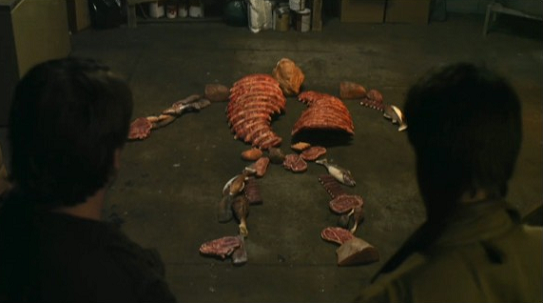
A jittery, nervous-looking young man (Chase Williamson) is sitting in a Chinese restaurant, waiting to meet a reporter called Arnie (Paul Giamatti), to whom he intends to tell his life story. We soon learn that this young man is David Wong, and that the story he has to tell is ever so slightly out of the ordinary. This is because Dave and his friend John (Rob Mayes) spend their nights battling forces of unimaginable cosmic evil, manifested as invisible demons, microscopic flying worms and seven foot-tall monsters made of raw meat. Through a series of bizarre and horrifying flashbacks, Dave relates the story of how he and John first came into contact with ‘soy sauce’, a living drug which gave them unique abilities and disturbing visions of the true nature of reality. Stumbling into a strange new world where time runs both ways and monsters are always underneath the bed ultimately sets John and Dave on a collusion course with Korrok, a near-omnipotent alien entity of unspeakable evil. Before long, the fate of all humanity is resting in the hands of two slackers and their possibly magical dog; welcome to the mind-bending world of John Dies at the End!
A film about sentient hallucinogens, exploding zombies and an inter-dimensional apocalypse was never going to be easy to realise on a modest budget, but if there’s one man you’d want in charge of such a heady brew it’s the director responsible for such cult hits as Phantasm and Bubba Ho-tep. Don Coscarelli makes a very good fist of adapting Wong’s novel, source material which would prove challenging for even the most gifted film-maker, and although it has a number of flaws the tone and atmosphere of the film – arguably the most vital aspect of the book to convey – are pitched just right, a quality which covers a multitude of sins. The story of two slacking monster hunters, whose battles with undead monstrosities and alien gods are frequently determined by little more than dumb luck and accident, is one that could easily veer too far towards either gruesome horror or out-and-out comedy. The most impressive aspect of Wong’s writing is his ability to constantly walk a tightrope between the two, and thankfully this is a quality which Coscarelli has managed to replicate on film. The cast is also uniformly excellent; newcomers Mayes and Williamson nail their characters, and there’s strong support from both Giamatti (also executive producer) as the skeptical journalist and genre heavyweight Clancy Brown as shadowy TV psychic and scourge of the undead Dr Albert Marconi.
The film’s one key failing is the approach it takes to adapting its source material. Books and their film adaptations should of course be treated as separate entities, but the clumsy and haphazard way in which John Dies at the End draws on material from Wong’s original novel has a detrimental effect on the movie’s plotting. Certain supporting characters in the movie are devoid of any convincing identity or motivation, and various important subplots from the book are incorporated only in part, meaning that seemingly significant revelations and dialogue references are simply left hanging as apparent red herrings. Of course, viewers who have read the book will be able to fill in the gaps, but the film should be able to stand on its own as a complete piece of work, and this apparently piecemeal approach to adaptation will only lead to confusion for viewers unfamiliar with the source material. Primarily for this reason, John Dies at the End falls short of being the modern cult classic it so desperately wants to be (and could easily have been), but remains an immensely enjoyable film both for fans of the book and for newcomers. Well worth a watch….if it ever gets a UK release!
J.J. Abrams’ second installment in his rebooted Star Trek series begins with a perfectly-formed action set piece which, despite its breakneck pace, finds enough time to pose key questions about “the prime directive”. Long-time fans will doubtless be elated about the inclusion of this particular piece of Trek-lore, after Abram’s first film – 2009’s Star Trek – drew a great deal of criticism from Trekkies for not paying enough attention or respect to the franchise’s roots. For the uninitiated, “the prime directive” is a core principle of Federation law which forbids Starfleet’s intervention in the development of “pre-warp” civilisations. A blatant allegory for non-interventionist global politics, the directive has been used as a plot device to generate moral dilemmas for Trek captains since its first appearance in the original TV series in 1967. Though far from obvious at the time, references made to the directive in the opening moments of Star Trek Into Darkness actually give a good indication of the direction the film takes as a whole – one defined by both moral dilemma and reference to Trek history. Unfortunately, neither theme is handled particularly well by the film-makers, as we shall explore below.
The film pits Captain Kirk (Chris Pine), Commander Spock (Zachary Quinto) and the rest of the Enterprise crew against enemies both foreign and domestic, as they attempt to hunt down the mysterious John Harrison (Benedict Cumberbatch), a terrorist waging a one-man war against Starfleet. Their pursuit takes the crew deep into the territory of the antagonistic Klingon Empire, where they quickly discover the truth about their covert mission and the real identity of Harrison and his allies, with deadly consequences for Starfleet’s best and brightest. Alliances will be broken, friendships tested and sacrifices made before the credits roll, making Star Trek Into Darkness a film which is packed with violent and emotional spectacle.
The film is indeed spectacular in the literal sense of the word as it races from one breathtaking set-piece to another, be it a skirmish with snappily-redesigned Klingon warriors, a heart-stopping space-leap between two starships, or the overwhelming sight of a tumbling space craft levelling half of a futuristic San Francisco. Abrams’ talent for shooting grandiose action sequences proves to be the film’s greatest strength, though the humorous yet touching interaction between the main characters manages to keep the movie grounded whenever style threatens to overwhelm substance, and is a credit to both the actors and writers involved. Special mention must also go to Benedict Cumberbatch, who works menacing wonders with what on paper is little more than a pantomime villain role, and Peter Weller, whose Admiral Marcus becomes a memorable character when he could merely have been an extended cameo.
Where Star Trek Into Darkness really falls down, though, is in its approach to the twin themes of moral dilemma and Trek history. The question of whether the needs of the many outweigh the needs of the few is posed repeatedly in a heavy-handed and somewhat clumsy manner, whether through the aversion of a massive natural disaster through one person’s death, the destruction of a ship full of people to ensure the military advancement of a species, or the sacrifice of an individual to save their crew-mates. In all but one of these scenarios a handy third option eventually presents itself, sparing the characters from engaging properly with some rather sticky moral problems. This convenience suggests that the point of the exercise is not a meditation on moral philosophy, but rather the aping of the film’s televisual and cinematic predecessors, which would frequently pose such questions to their characters, and by extension their audience, often without providing convenient answers. A subplot involving the attempted execution of one character without trial also feels less like an allegory for targeted drone strikes recently employed by the US military in Pakistan and Afghanistan, and more like another attempt to shoehorn in moral dilemma for the sake of paying homage to the Star Treks of yesteryear.
It is this tendency towards homage which is the film’s greatest weakness. While it is understandable that Abrams and the film’s writers would wish to make reference to the original incarnations of their characters, particularly as 2009’s Star Trek drew criticism for not being enough of a “Star Trek” film, the whole point of the ‘alternate timeline’ conceit which underpins Abrams’ movies is surely to have the freedom to tell fresh stories with familiar characters. While it makes sense within the film’s fictional universe for certain characters and situations from the original films to be re-used, it is frustrating as a viewer to see great chunks of classic story-lines simply given a modern make-over, and smacks of laziness on the part of the screenwriters. Spock’s rather awkward delivery of a classic line towards the end of the film sums it up perfectly; the viewer is uncomfortably reminded that what they are seeing is a very deliberate reference to an older film, and the effect is jarring. Homage is all well and good, but there must be a line, and Star Trek Into Darkness unfortunately crosses it. For all its towering spectacle, the film ultimately feels like a tribute act to the original article.
A recent (spoiler-heavy) article over at Den of Geek suggested that Iron Man Three (as the film’s credits dub it) is the most irreverent superhero yet made. It’s true that writer/director Shane Black (famous for his work on such action staples as Lethal Weapon and The Last Boy Scout) brings a freshness to the project that marks it out from the first two Iron Man films as well as other entries in Marvel’s shared cinematic universe, but his revisions to the source material are perhaps not so very radical in an age where page-to-screen alterations have become de rigueur for comic book adaptations. Ultimately, Black’s innovations are both a blessing and a curse for Iron Man Three, but they certainly make for an entertaining watch.
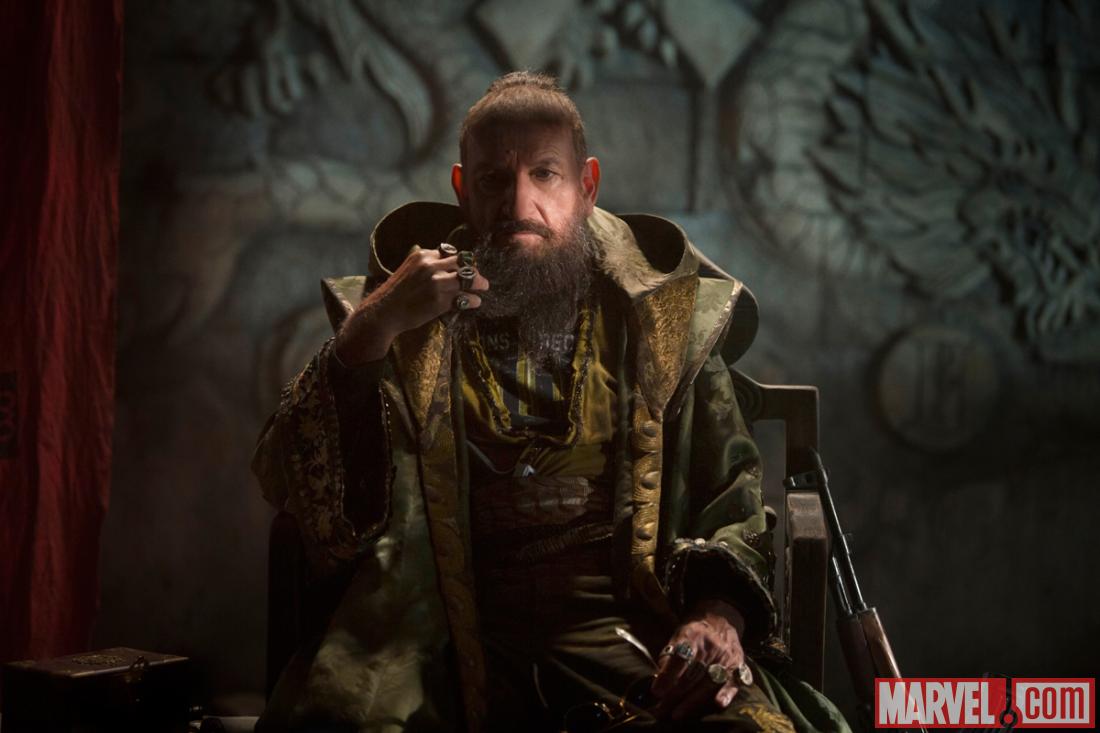
The film finds Tony Stark (Robert Downey Jr.) tormented by an existential crisis following the events of Avengers Assemble, with the mere mention of “New York” enough to cripple him with debilitating anxiety attacks. Struggling to understand his place in this suddenly expanded universe, Stark finds new purpose in taking aim at terrorist leader The Mandarin (Sir Ben Kingsley), when one of the latter’s bombings hits too close to home. But Stark’s arrogance soon proves to be his undoing, and before long he’s out in the cold with no powerful allies and no advanced technology, forced into a situation which harks back to the scrapheap improvisation of the first film. Meanwhile, Stark’s significant other Pepper Potts (Gwyneth Paltrow) is being courted by sinister scientist Aldrich Killian (Guy Pearce), creator of a virus called Extremis which he claims is an “upgrade” that human biology has evolved to accept. As the true nature of Extremis and its connection to the Mandarin is revealed, Stark and his old friend Rhodey (Don Cheadle) are forced to utilise unconventional methods in order to combat the mounting threat.
In interviews prior to the film’s release, Ben Kingsley repeatedly stated that what had sold him on the film was the recurring theme of ‘masks’, and the idea that several characters in Iron Man Three are not quite what they appear to be. This notion of deceptive appearances is indeed central to Kingsley’s Mandarin, a character who for much of the film is shrouded in mystery, but to extend it any further than that would be to credit the movie with more depth than it truly possesses. This isn’t to say that Iron Man Three is a poor film – far from it. The high standards of film-making which we’ve come to expect from Marvel Studios are maintained here, with Downey Jr. and Paltrow giving familiarly strong performances, and newcomers Pearce and Kingsley bringing serious acting clout to memorable roles. The myriad action set pieces are visually stunning and suitably spectacular, while Black’s quip-heavy dialogue brings some welcome levity to what would otherwise be rather solemn proceedings. Unlike the meanderings of the bloated Iron Man 2, the film tells a relatively straightforward story with few diversions, with the emphasis on Tony Stark’s fall and rise bringing the trilogy full circle in thematic terms. Indeed, there’s a sense of finality about Iron Man Three which suggests that now would be a good time for Downey Jr. to hang up the armour, allowing the character a natural ending. Unfortunately, it’s doubtful that Marvel’s multi-movie Avengers masterplan will allow Tony Stark such a respite, and the character is sure to return with or without the involvement of Robert Downey Jr.
Iron Man Three makes for undeniably thrilling entertainment, returning the franchise to the high standards set by 2008’s Iron Man, but is not without its weak points. Rebecca Hall’s Maya Hansen (a significant character in the Extremis comic which serves as the film’s primary source material) is so marginalised as to be almost superfluous, and the plot line about Stark’s recurring anxiety attacks is never fully resolved. These are both issues which might have arisen due to editing constraints, and the latter may even be dealt with in subsequent Avengers films, but both are nonetheless irksome. Arguably the film’s biggest problem, though, is also its greatest strength: Shane Black. His irreverent approach brings a breath of fresh air to Marvel’s established universe, but Black is very much a writer who plays to his strengths. There’s much in the dialogue and character dynamics of Iron Man Three that harks back to his earlier work, such as Lethal Weapon and The Long Kiss Goodnight, and with Tony Stark out of his armour for most of the running time there are large portions of the film that bear little resemblance to superhero cinema. This of course begs the question of what exactly a superhero film should look like, and Black’s irreverence certainly ensures that the Iron Man trilogy doesn’t end on a stale note. But surely a film about superheroes should venerate genre conventions a least a little, otherwise the masks and costumes are just surplus to requirements.
This year Superman turns 75, and what better way to celebrate than with the release of a new movie adaptation of his heroic exploits? The lukewarm critical and commercial reception which greeted Bryan Singer’s Superman Returns in 2006 caused many to question whether another attempt would ever be made to bring the character back to the big screen, and whether in a post-Dark Knight world of gritty superheroic realism there was actually any place for a such an unashamedly technicolor hero as Superman. Despite this, Zack Snyder’s cinematic reboot, Man of Steel, is due to open in cinemas this June, seven years to the month since Superman Returns was released. Unlike Singer’s film, Man of Steel will be a retelling of Superman’s origins, and will attempt to build an entirely new – albeit familiar – cinematic identity for the last son of Krypton. But there is widespread apprehension about how the film will actually depict Superman, and not merely because of the perceived poor showing of its Hollywood predecessors. Simply put, Superman is very difficult to get right, arguably more so than any other A-list superhero. Although Man of Steel‘s latest eye-popping trailer has assuaged this concern somewhat, worries still remain about Zack Snyder’s approach to adapting this cultural icon for the big screen.
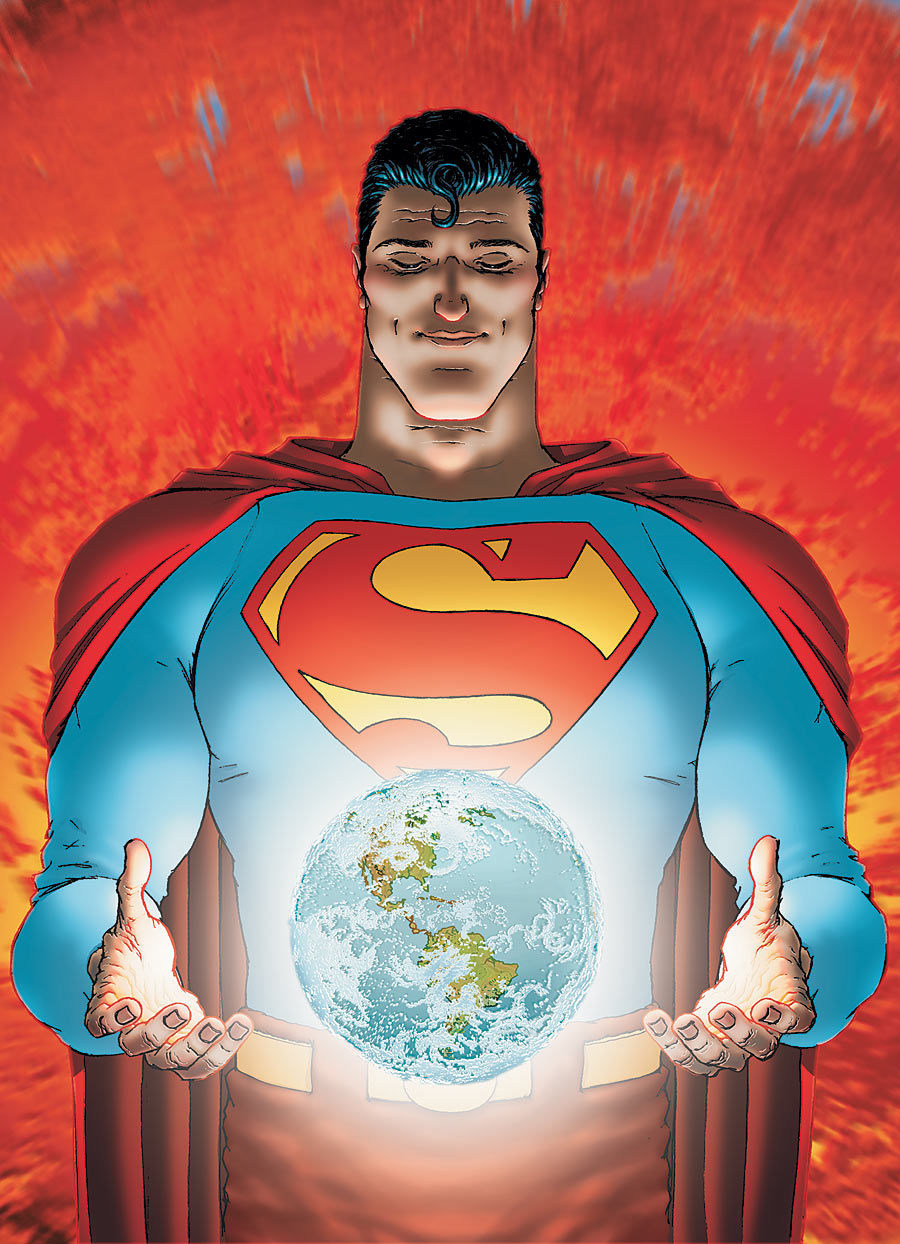
Why should this be so? After all, the basic concept of Superman is so simple that Grant Morrison and Frank Quitely were able to sum it up with just four panels and a splash page in their beautifully constructed comic All-Star Superman (of which more later). Why should such an uncomplicated story be so difficult to tell well? There are two answers to this question, namely the inherently mythic nature of Superman, and the current realist paradigm in 21st century superhero cinema.
Celebrated comics author Grant Morrison writes extensively in his book Supergods about the mythic quality of superheroes, and the fact that they should rightly be understood as the successors to ancient Greek characters like Hercules and Perseus, rather than the military heroes and science-fiction adventurers who preceded them as comic strip icons. This mythic status, he argues, is particularly true of Superman, the archetypical superhero. However one interprets the Man of Steel, be it as an allegory for the Jewish diaspora or a Christ-like role model for human morality, his uncomplicated do-gooding and nebulous super-powers place him squarely in the mold of the mythical heroes from antiquity, as opposed to, say, the more obviously science-fiction realm of other DC characters like Green Lantern and Martian Manhunter, as well as many Marvel heroes like Iron Man, the Incredible Hulk and Captain America. The reason that Morrison’s aforementioned mini-series All-Star Superman is arguably the best Superman comic ever written is that this mythic quality is right at the heart of its depiction of the character. There is no post-Watchmen attempt to drag an emphatically fantastical hero kicking and screaming into reality; rather, the comic basks in the sheer unreality of its central concept.
A common criticism levelled at Superman by fans of more mundane superhero characters is that he is simply too powerful, and that since activities as prosaic as stopping crime and fighting supervillains are no challenge to him, they do not generate dramatic tension. In a way, this criticism is a valid one, but it is a mistake to think that the problem lies with the character of Superman, rather than the challenges with which generations of comics writers have traditionally presented him. Morrison realised that the best possible way to portray Superman was as a modern myth; a primary-coloured titan undertaking Herculean, galaxy-spanning labours which befitted his stature. He demonstrated that having a central character possessed of such god-like power is no barrier to great story-telling, provided that you place him in the correct context. Such a character is also suited to the epic spectacle of short-form, ‘event’ storytelling – as the lean twelve-issue length of All-Star Superman suggests – rather than the long-form, never-ending story-lines of most comic books, which are always in danger of making the mythical mundane. This being the case, concise, two-hour chunks of film seem like the ideal medium for properly rendering the mythic tale of Superman, provided that they also contain the appropriate level of visual spectacle. Why then should there be such apprehension about this latest attempt to adapt Superman for the big screen?
Hollywood’s penchant for gritty realism in superhero films arguably began with Stephen Norrington’s Blade and Bryan Singer’s X-Men, but it was compounded by the success of two superhero franchises which were dominated by such an aesthetic; Jon Favreau’s Iron Man films and – in particular – Christopher Nolan’s Batman trilogy. Zack Snyder is very much a director for these times, as even a cursory glance at his oeuvre will confirm. The success of 300 and Watchmen havemade him a prime candidate for realising comic book properties in this age of dark, cynical blockbusters, where the primary colours of yesterday’s superheroes have been dulled to a grey pallor. This is not to say that such an approach hasn’t reaped artistic dividends for certain characters; Nolan’s take on Batman has been nothing short of a critical triumph, and despite its apparent lightheartedness, Joss Whedon’s Avengers Assemble would have been a much lesser film without a darker heart beating beneath its veneer of colourful irony. It’s tempting to assume that what’s good for the super-goose is good for the super-gander, and early publicity stills from Snyder’s Man of Steel which emphasised a darker take on a classic story suggested that this virulent strain of grit and cynicism would be bringing a new lease of life to Superman’s cinematic incarnation. But it is a fundamental mistake to assume that, just because Superman occasionally shares a comic with Batman, what brought out the best in the latter’s character will do the same for the former in the context of a movie adaptation.
Dragging an inherently mythical creation into a world of gritty realism only serves to lessen it, and any attempt to adapt Superman in such a way will not only fail to revitalise the franchise, but will also confirm cynics’ suspicions that the character is irredeemably out of touch, and belongs solely to a bygone era when superheroes were uncomplicated and ironic self-awareness was not a prerequisite for storytelling. A mythical character needs to be placed in a mythical context, which means creating a film that eschews the dominant fashion for darkness, cynicism and irony in superhero movies. Superman is meant to be a symbol, representing the very best that humanity can aspire to be in a character who isn’t even human himself. Grant Morrison’s suggestion that Superman should be portrayed “a bit like Jesus” is perhaps not so very wide of the mark. We can only hope that Zack Snyder, Christopher Nolan (producing) and David S. Goyer (the film’s writer) will have been brave enough to produce a movie which bucks the current trend of superhero cinema, and doesn’t darken its hero to the point where those primary colours are no longer visible. The latest trailer for Man of Steel gives us some hope that this might be the case after all, with its promise of epic spectacle tempered by sincere sentimentality. But only time will tell if, 75 years after his first appearance in Action Comics, the modern myth of Superman can survive the cynicism of the 21st century.



 Batman Incorporated, for all its position as a mainstream DC title, actually feels like the most “Grant Morrison” thing that Grant Morrison has written in years. It’s also probably (along with the rest of his Batman run) the best thing he’s written in years, and certainly since his magnum opus The Invisibles ended in 2000. But the same Morrison-esque tropes which will delight his fans (including a fractured narrative, elements of meta-fiction and unresolved mysteries which the reader must piece together themselves) are sure to alienate casual comics readers, and occasionally mean that other parts of his storytelling, such as his characterisation, suffer. A lot can be forgiven, though, simply because Batman Incorporated is such a thoroughly entertaining read. It has its flaws, but every issue is a thrilling page-turner, and plotting ambiguities which may initially have you scratching your head are more often than not resolved into hugely satisfying story developments. It remains to be seen whether the series will yet serve as a satisfying conclusion to seven years of Grant Morrison’s Batman (there are seven issues still to be collected), but if Demon Star is anything to go by, Batman Incorporated will be a fitting denouement to one of the greatest achievements in modern superhero comics.